
Introduction to AI and Renewable Energy
Expert-defined terms from the Professional Certificate in AI Applications for Renewable Energy course at Stanmore School of Business. Free to read, free to share, paired with a professional course.
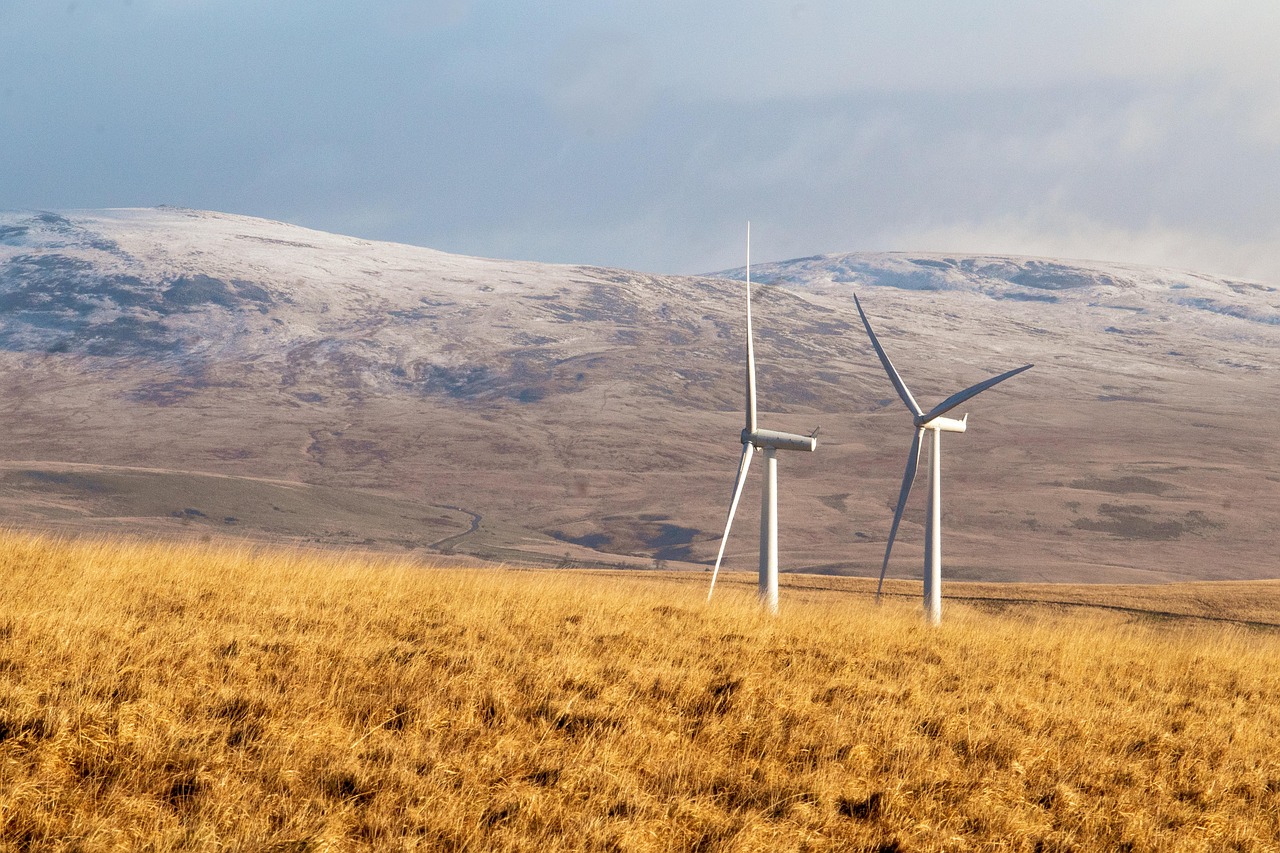
Artificial Intelligence (AI) – Concept #
Machine intelligence that mimics human cognitive functions. Related terms: machine learning, deep learning, neural networks. Explanation: AI enables computers to analyze data, recognize patterns, and make decisions with minimal human intervention. In renewable energy, AI predicts solar irradiance, optimizes wind turbine yaw, and balances grid supply and demand. Example: A utility uses AI to forecast hourly solar output, reducing reliance on fossil‑fuel backup. Practical application: AI‑driven energy management systems automatically dispatch stored energy from batteries when forecasted generation dips. Challenges: Data quality, model interpretability, and integration with legacy SCADA systems often hinder deployment.
Algorithmic Bias – Concept #
Systematic error introduced by a model’s design or training data. Related terms: fairness, ethical AI, data preprocessing. Explanation: In renewable‑energy forecasting, biased algorithms may over‑estimate production in regions with abundant historical data while under‑representing sparsely monitored areas. Example: A wind‑prediction model trained on coastal datasets performs poorly for inland farms, leading to suboptimal turbine scheduling. Practical application: Incorporating diverse meteorological datasets and applying bias‑mitigation techniques improves equitable resource allocation. Challenges: Identifying hidden biases, obtaining representative data, and balancing accuracy with fairness.
Battery Energy Storage System (BESS) – Concept #
Facility that stores electrical energy chemically for later use. Related terms: Li‑ion batteries, grid‑scale storage, state of charge (SoC). Explanation: BESS smooths variability of solar and wind generation, providing peak‑shaving, frequency regulation, and backup power. Example: A solar farm couples a 50 MWh BESS to shift midday excess generation to evening demand. Practical application: AI optimizes charging cycles based on price signals and weather forecasts, extending battery life. Challenges: Degradation, high capital cost, and need for accurate SoC estimation algorithms.
Carbon Capture, Utilization, and Storage (CCUS) – Concept #
Technologies that capture CO₂ emissions, convert them into useful products, or store them underground. Related terms: post‑combustion capture, enhanced oil recovery, geologic sequestration. Explanation: While not a renewable source, CCUS complements AI‑driven energy systems by reducing residual emissions from hybrid plants. Example: An AI controller monitors flue‑gas CO₂ concentration, adjusting solvent flow to maximize capture efficiency. Practical application: Machine‑learning models predict optimal injection pressures for long‑term storage integrity. Challenges: High energy penalty, public acceptance, and regulatory uncertainty.
Capacity Factor – Concept #
Ratio of actual energy produced over a period to the maximum possible output if the plant operated at full nameplate capacity. Related terms: capacity utilization, availability, performance ratio. Explanation: Capacity factor reflects intermittency of renewables; solar typically 15‑25 %, wind 30‑45 %. Example: A 10 MW wind farm with a 35 % capacity factor generates ~30 GWh annually. Practical application: AI models forecast capacity factor variations using weather ensembles, informing market bids. Challenges: Accurate long‑term forecasting, terrain‑specific turbulence effects, and maintenance downtime.
Computational Fluid Dynamics (CFD) – Concept #
Numerical simulation of fluid flow, heat transfer, and related phenomena. Related terms: turbulence modeling, finite volume method, mesh generation. Explanation: CFD predicts wind patterns around turbine blades and terrain, enabling optimized siting and blade design. Example: Engineers use CFD to assess wake interactions in a clustered offshore wind farm, reducing energy losses. Practical application: AI accelerates CFD by learning surrogate models that approximate full simulations in seconds. Challenges: High computational cost, need for validation against field measurements, and sensitivity to boundary conditions.
Demand Response (DR) – Concept #
Adjustments in electricity consumption by end‑users in response to price signals or grid needs. Related terms: load shedding, price elasticity, smart thermostats. Explanation: AI‑enabled DR programs shift flexible loads (e.G., HVAC, EV charging) to periods of abundant renewable generation, flattening demand peaks. Example: A commercial building’s AI platform reduces HVAC cooling when solar output declines, earning incentives. Practical application: Real‑time DR algorithms integrate weather forecasts, occupancy sensors, and tariff structures. Challenges: Consumer participation, cybersecurity of IoT devices, and coordination across heterogeneous loads.
Distributed Energy Resources (DER) – Concept #
Small‑scale power generation or storage technologies located close to the point of consumption. Related terms: microgrids, behind‑the‑meter, prosumer. Explanation: DERs include rooftop PV, small wind turbines, and residential batteries, collectively reshaping grid topology. Example: A neighborhood with 30 % rooftop PV uses AI to coordinate battery dispatch, maintaining voltage stability. Practical application: Hierarchical AI agents manage DER fleets, balancing local constraints with wholesale market signals. Challenges: Interoperability, data privacy, and regulatory frameworks for aggregation.
Energy Management System (EMS) – Concept #
Software platform that monitors, controls, and optimizes energy flows within a facility or grid. Related terms: SCADA, optimal power flow (OPF), predictive analytics. Explanation: EMS integrates sensor data, forecasts, and optimization algorithms to achieve cost and sustainability targets. Example: A manufacturing plant’s EMS uses AI to schedule high‑energy processes during low‑price solar peaks. Practical application: Real‑time EMS adjusts inverter set‑points to maximize power factor and reduce curtailment. Challenges: Scalability, real‑time data latency, and aligning operational objectives across departments.
Feature Engineering – Concept #
Process of selecting, transforming, and creating input variables for machine‑learning models. Related terms: dimensionality reduction, principal component analysis (PCA), domain knowledge. Explanation: In renewable‑energy forecasting, features may include historical irradiance, cloud cover indices, and turbine blade pitch. Example: Converting raw satellite images into cloud‑motion vectors improves short‑term solar forecasts. Practical application: Automated feature‑engineering pipelines use genetic algorithms to discover optimal representations. Challenges: Overfitting, curse of dimensionality, and maintaining interpretability.
Forecast Horizon – Concept #
Time interval into the future for which a model predicts a variable. Related terms: short‑term forecast, mid‑term forecast, long‑term forecast. Explanation: Renewable‑energy operators use different horizons for dispatch (minutes to hours), market participation (day‑ahead), and planning (years). Example: A 15‑minute solar forecast guides inverter curtailment decisions, while a 1‑year wind forecast informs investment sizing. Practical application: Multi‑horizon AI ensembles combine high‑frequency sensor data with climatological models. Challenges: Balancing accuracy across horizons, handling seasonal variability, and integrating disparate data sources.
Geothermal Energy – Concept #
Heat extracted from the Earth’s interior for electricity generation or direct use. Related terms: binary cycle plant, enhanced geothermal systems (EGS), thermal gradient. Explanation: AI optimizes drilling locations, predicts reservoir performance, and controls plant operations to maximize output. Example: Machine‑learning models analyze seismic data to identify promising EGS sites. Practical application: Real‑time AI adjusts fluid flow rates to maintain reservoir pressure while avoiding induced seismicity. Challenges: High upfront risk, limited site data, and complex subsurface modeling.
Grid Parity – Concept #
Point at which the cost of renewable electricity equals or is lower than conventional generation without subsidies. Related terms: levelized cost of electricity (LCOE), price competitiveness, market penetration. Explanation: Achieving grid parity accelerates adoption; AI reduces LCOE by improving forecasting, reducing curtailment, and extending asset life. Example: A solar farm uses AI‑driven cleaning schedules to maintain high performance, lowering its effective LCOE. Practical application: Predictive maintenance models detect inverter degradation before failure, avoiding costly downtime. Challenges: Regional price differences, policy changes, and integration costs for variable generation.
Hybrid Renewable System – Concept #
Combination of two or more renewable technologies, often paired with storage, to deliver reliable power. Related terms: solar‑wind‑battery, renewable microgrid, energy diversification. Explanation: Hybrid systems balance complementary generation profiles, reducing intermittency. Example: A coastal installation couples wind turbines with floating solar panels; AI coordinates output to meet a constant load. Practical application: Optimization algorithms schedule battery charge/discharge based on combined forecasted generation. Challenges: Complex control logic, increased capital cost, and need for robust communication infrastructure.
Internet of Things (IoT) – Concept #
Network of interconnected sensors and devices that collect and exchange data. Related terms: edge computing, smart meters, cyber‑physical systems. Explanation: IoT devices provide granular measurements of temperature, wind speed, and equipment health, feeding AI models. Example: Distributed anemometers transmit real‑time wind data to a cloud‑based AI platform for turbine yaw control. Practical application: Edge AI processes data locally to reduce latency and bandwidth usage. Challenges: Data security, device heterogeneity, and maintenance of large sensor fleets.
Learning Rate – Concept #
Hyperparameter that determines the step size at each iteration while moving toward a minimum of a loss function. Related terms: gradient descent, optimizer, convergence. Explanation: In training neural networks for renewable‑energy prediction, an appropriate learning rate ensures stable convergence without overshooting. Example: A solar‑forecast model uses a cyclical learning‑rate schedule to escape local minima. Practical application: Adaptive optimizers (e.G., Adam) automatically adjust learning rates per parameter. Challenges: Selecting suitable schedules, avoiding vanishing or exploding gradients, and balancing training speed with accuracy.
Load Forecasting – Concept #
Prediction of electrical demand over various time horizons. Related terms: demand prediction, time‑series analysis, peak load estimation. Explanation: Accurate load forecasts enable efficient integration of renewable generation and reduce reliance on peaker plants. Example: An AI model incorporates weather, calendar, and socioeconomic data to forecast residential load for the next 24 hours. Practical application: Utilities use forecasts to schedule renewable dispatch and procure ancillary services. Challenges: Capturing behavioral shifts, handling extreme weather events, and reconciling data from disparate meters.
Machine Learning (ML) – Concept #
Subfield of AI that enables computers to learn patterns from data without explicit programming. Related terms: supervised learning, unsupervised learning, reinforcement learning. Explanation: ML drives many renewable‑energy applications, from solar irradiance prediction to turbine fault detection. Example: A random‑forest model predicts wind turbine gearbox failure based on vibration spectra. Practical application: Transfer learning allows models trained on one wind farm to accelerate deployment on another. Challenges: Data scarcity, model drift over time, and need for domain‑specific feature extraction.
Neural Network (NN) – Concept #
Computational model composed of interconnected layers of nodes that mimic biological neurons. Related terms: deep neural network (DNN), convolutional neural network (CNN), recurrent neural network (RNN). Explanation: NNs excel at capturing nonlinear relationships in renewable‑energy datasets. Example: A CNN processes sky‑camera images to classify cloud types, improving short‑term solar forecasts. Practical application: An RNN predicts hourly wind speed using past sequences, feeding dispatch algorithms. Challenges: Requirement for large labeled datasets, risk of overfitting, and opacity of learned representations.
Optimization – Concept #
Mathematical process of finding the best solution under given constraints. Related terms: linear programming (LP), mixed‑integer linear programming (MILP), convex optimization. Explanation: In renewable‑energy planning, optimization determines the optimal mix of generation, storage, and transmission assets. Example: A MILP model minimizes total system cost while meeting reliability criteria for a region with high solar penetration. Practical application: Real‑time optimal power flow uses AI to solve large‑scale AC OPF problems within seconds. Challenges: Computational tractability, uncertainty modeling, and multi‑objective trade‑offs.
Photovoltaic (PV) System – Concept #
Arrangement of solar cells that convert sunlight into electricity. Related terms: module efficiency, inverter, maximum power point tracking (MPPT). Explanation: AI improves PV performance through predictive cleaning, shading detection, and MPPT algorithms. Example: A drone captures aerial imagery of a solar farm; AI identifies soiling hotspots for targeted cleaning. Practical application: AI‑based MPPT adjusts voltage set‑points in response to rapid cloud movement, maximizing energy capture. Challenges: Degradation monitoring, inverter failures, and variability due to weather.
Power Purchase Agreement (PPA) – Concept #
Contract between a power producer and a buyer specifying price, duration, and delivery terms. Related terms: off‑take contract, tariff, renewable energy certificate (REC). Explanation: PPAs provide revenue certainty, enabling financing of renewable projects; AI can simulate PPA performance under different market scenarios. Example: An AI model forecasts revenue streams for a 100 MW wind farm under a 15‑year PPA linked to spot market prices. Practical application: Sensitivity analysis helps investors assess risk of price volatility. Challenges: Contractual rigidity, regulatory changes, and accurate forecasting of future market conditions.
Quantum Computing – Concept #
Computing paradigm that leverages quantum bits (qubits) to perform certain calculations more efficiently than classical computers. Related terms: quantum annealing, gate model, quantum supremacy. Explanation: Early research explores quantum algorithms for solving large‑scale unit‑commitment and optimal power flow problems in renewable grids. Example: A quantum annealer tackles a combinatorial scheduling problem for battery dispatch across multiple sites. Practical application: Hybrid quantum‑classical workflows use quantum sub‑routines to accelerate parts of the optimization. Challenges: Limited qubit counts, error rates, and the need for specialized expertise.
Renewable Energy Certificate (REC) – Concept #
Tradable instrument that represents proof that one megawatt‑hour of renewable electricity was generated. Related terms: green certificate, carbon offset, compliance market. Explanation: RECs enable organizations to meet sustainability targets; AI models predict REC price trends to inform procurement strategies. Example: A corporate buyer uses AI to time REC purchases when market prices dip due to high renewable output. Practical application: Forecasting tools incorporate weather, generation forecasts, and policy changes. Challenges: Market fragmentation, double‑counting risks, and price volatility.
Smart Grid – Concept #
Electricity network that uses digital communication technology to detect and react to changes in usage and generation. Related terms: advanced metering infrastructure (AMI), grid automation, demand-side management. Explanation: AI enhances smart‑grid functions such as fault detection, voltage regulation, and dynamic pricing. Example: An AI engine identifies abnormal voltage dips caused by rapid wind ramp events, triggering automated corrective actions. Practical application: Distributed AI agents coordinate thousands of DERs to maintain frequency stability. Challenges: Cybersecurity, data interoperability, and ensuring resilience against large‑scale disturbances.
Solar Irradiance Forecast – Concept #
Prediction of the solar energy received per unit area over a specified future interval. Related terms: clearsky index, global horizontal irradiance (GHI), short‑term forecast. Explanation: Accurate irradiance forecasts reduce solar curtailment and improve market participation. Example: A CNN processes satellite imagery to estimate cloud cover, delivering a 15‑minute ahead GHI forecast with 95 % confidence. Practical application: The forecast feeds into the EMS to schedule battery charging, ensuring supply during forecasted dips. Challenges: Cloud dynamics complexity, limited ground‑truth data in remote regions, and computational demands for high‑resolution forecasts.
Supervised Learning – Concept #
ML paradigm where models are trained on input‑output pairs to learn a mapping. Related terms: regression, classification, labelled dataset. Explanation: Most renewable‑energy prediction tasks, such as wind speed regression, rely on supervised learning. Example: A gradient‑boosted tree model learns to predict hourly solar output from historical weather variables. Practical application: Model performance is evaluated using metrics like RMSE and MAE before deployment. Challenges: Obtaining high‑quality labels, handling missing data, and ensuring models generalize to unseen conditions.
Time‑Series Decomposition – Concept #
Technique that separates a series into trend, seasonal, and residual components. Related terms: ARIMA, seasonal decomposition of time series (STL), trend analysis. Explanation: Decomposition aids in understanding periodic patterns in renewable generation and demand. Example: STL reveals a strong daily solar pattern and a weekly wind variability, informing model selection. Practical application: Residuals are fed into ML models to capture anomalies. Challenges: Non‑stationarity, irregular sampling intervals, and selection of appropriate window sizes.
Transfer Learning – Concept #
Method where a model trained on one task is repurposed for a related task, reducing required data. Related terms: pre‑training, fine‑tuning, domain adaptation. Explanation: In renewable energy, a wind‑forecast model developed for a coastal site can be adapted to an inland farm with limited data. Example: A CNN pre‑trained on global satellite images is fine‑tuned on local sky‑camera data to improve cloud detection. Practical application: Transfer learning accelerates deployment and cuts training costs. Challenges: Mismatch between source and target domains, negative transfer, and need for careful validation.
Uncertainty Quantification (UQ) – Concept #
Process of characterizing the confidence or error bounds of model predictions. Related terms: probabilistic forecasting, Monte Carlo simulation, confidence interval. Explanation: UQ informs risk‑aware decision making for renewable integration; AI models output predictive distributions rather than point estimates. Example: A probabilistic wind forecast provides a 10‑minute ahead distribution, enabling operators to assess the likelihood of exceeding turbine limits. Practical application: Scenario analysis combines UQ with market price models to optimize hedge positions. Challenges: Computational overhead, calibration of predictive intervals, and communicating uncertainty to non‑technical stakeholders.
Virtual Power Plant (VPP) – Concept #
Aggregated network of distributed generation, storage, and demand‑response assets that operate as a single controllable entity. Related terms: aggregator, grid services, dispatchable resource. Explanation: AI coordinates the VPP to provide frequency regulation, reserve, and peak‑shaving. Example: A VPP comprising rooftop PV, residential batteries, and smart‑load devices bids into the ancillary‑services market, earning revenue. Practical application: Multi‑agent reinforcement learning optimizes collective behavior while respecting individual constraints. Challenges: Real‑time communication latency, regulatory approval for market participation, and ensuring fairness among participants.
Wind Turbine Power Curve – Concept #
Relationship between wind speed and electrical power output for a specific turbine model. Related terms: cut‑in speed, rated power, capacity factor. Explanation: Accurate power‑curve modeling is essential for performance monitoring and forecasting. Example: AI calibrates the theoretical curve using SCADA data to account for site‑specific effects like turbulence. Practical application: Deviations from the calibrated curve trigger predictive maintenance alerts. Challenges: Sensor drift, data gaps, and accounting for aerodynamic losses due to wake interactions.
Zero‑Emission Goal – Concept #
Target to eliminate net carbon emissions from the electricity sector. Related terms: decarbonization, net‑zero, climate‑neutral. Explanation: AI accelerates progress toward zero‑emission by optimizing renewable deployment, storage sizing, and demand‑side flexibility. Example: A national grid operator uses AI to plan a mix of offshore wind, solar, and hydrogen storage that meets a 2050 net‑zero target. Practical application: Scenario modeling evaluates pathways, incorporating policy constraints and technology cost curves. Challenges: Uncertainty in future technology performance, financing barriers, and need for coordinated policy support.