
Wind Energy Analysis using AI
Wind Energy Analysis using artificial intelligence (AI) requires a shared vocabulary that bridges traditional wind‑power engineering with modern data‑driven techniques. The following glossary presents the essential terms and concepts that l…
Wind Energy Analysis using artificial intelligence (AI) requires a shared vocabulary that bridges traditional wind‑power engineering with modern data‑driven techniques. The following glossary presents the essential terms and concepts that learners of the Professional Certificate in AI Applications for Renewable Energy (Saudi Arabia) must master. Each entry includes a concise definition, illustrative example, practical application in AI‑enhanced wind projects, and a brief note on common challenges. The emphasis is on clarity and depth, enabling engineers, data scientists, and policymakers to communicate effectively across disciplines.
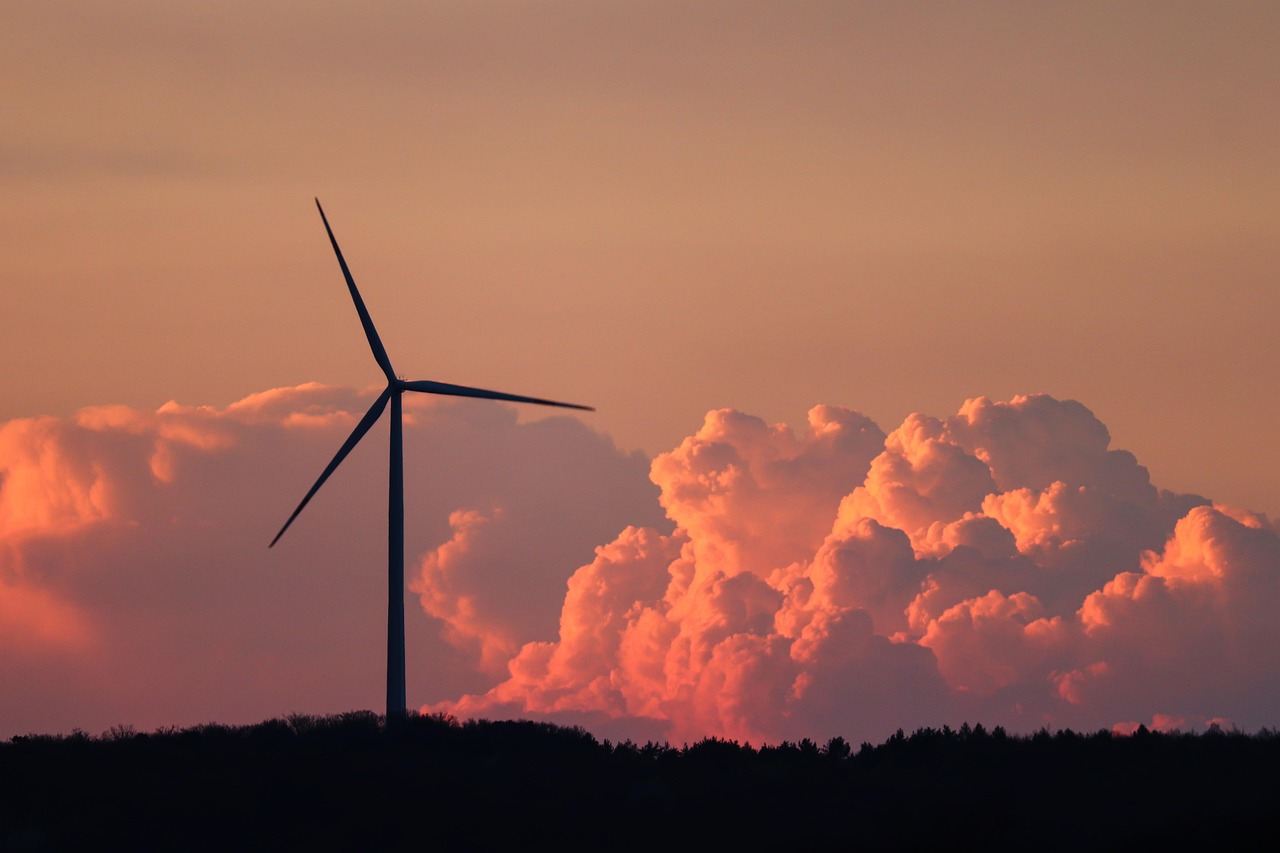
Wind turbine – The complete machine that converts kinetic energy of the wind into electrical power. A typical on‑shore turbine in Saudi Arabia may have a rated capacity of 3 MW, a hub height of 100 m, and a rotor diameter of 110 m. In AI workflows, the turbine is the primary source of sensor data (SCADA, vibration, temperature) that feed predictive‑maintenance models. A frequent challenge is the heterogeneity of data formats across turbine manufacturers, which can hinder model generalisation.
Rotor – The rotating assembly consisting of the blades and hub. The rotor speed (rpm) is a key variable for aerodynamic performance. For example, a turbine may operate at 12 rpm at rated wind speed. AI algorithms such as reinforcement learning can optimise rotor speed set‑points to maximise energy capture while respecting structural limits. The difficulty lies in balancing speed optimisation against fatigue loads that are not directly observable in real‑time data.
Blade – Each airfoil‑shaped component attached to the hub. Blade length, twist, and airfoil profile determine the power curve. A 55‑m blade is common for a 3 MW turbine. Machine‑learning models can predict blade‑specific load distributions using CFD‑generated datasets, enabling designers to iterate on blade geometry faster. However, CFD data are computationally expensive, so surrogate models must be carefully validated.
Hub – The central part of the rotor that connects the blades to the main shaft. Hub‑related measurements include torque and bearing temperature. Anomaly‑detection models often monitor hub temperature spikes to flag lubrication failures. The challenge is that hub temperature may be influenced by ambient conditions, requiring robust feature‑engineering to isolate true anomalies.
Nacelle – The enclosure that houses the gearbox, generator, and control electronics. The nacelle also contains a suite of sensors (vibration, acoustic, pressure). AI‑driven condition‑monitoring systems use vibration spectra from the nacelle to predict bearing wear. A practical issue is sensor drift over time, which can cause false alarms unless models incorporate drift‑correction techniques.
Gearbox – The mechanical transmission that steps up rotor speed to generator speed. Gearbox failures account for a significant portion of turbine downtime. Deep‑learning models trained on high‑frequency vibration data can detect early signs of gear tooth damage. The rarity of failure events creates an imbalanced dataset, necessitating techniques such as synthetic minority oversampling.
Generator – The electrical machine that converts mechanical rotation into electric power. Generator efficiency varies with load and temperature. AI‑based performance‑ratio calculators adjust for generator efficiency to provide more accurate energy‑yield estimates. Accurate temperature and load data are required; missing or noisy data can degrade model performance.
Power curve – The relationship between wind speed and electrical output for a specific turbine model. Power curves are often provided by manufacturers but may differ from field performance due to site‑specific effects. AI regression models can calibrate the theoretical power curve using measured SCADA data, improving forecasting accuracy. A challenge is that power‑curve fitting must account for turbulence and shear, which introduce variability.
Capacity factor – The ratio of actual energy produced over a period to the maximum possible energy if the turbine operated at rated power continuously. A 3 MW turbine with a 30 % capacity factor generates about 7.9 GWh per year. AI‑enhanced forecasting tools aim to maximise capacity factor by optimising turbine control and site selection. Estimating capacity factor accurately requires long‑term wind‑resource data and careful handling of data gaps.
Cut‑in speed – The minimum wind speed at which a turbine begins to generate electricity, typically around 3–4 m s⁻¹. Below this speed, the turbine remains idle. AI‑based start‑up strategies can delay cut‑in until a more favourable wind window, reducing wear while preserving energy capture. The trade‑off involves potential loss of low‑speed energy that may be valuable in low‑resource sites.
Cut‑out speed – The wind speed at which the turbine is shut down to avoid damage, usually near 25 m s⁻¹. AI‑driven control systems can modulate blade pitch to extend operation slightly beyond the nominal cut‑out, gaining additional energy in gusty conditions. However, operating near structural limits increases the risk of catastrophic failure, demanding rigorous safety validation.
Wind shear – The vertical gradient of wind speed, often expressed as a power‑law exponent. In desert environments, shear can be strong due to surface heating. AI models that incorporate shear profiles improve turbine‑performance predictions, especially for tall‑hub turbines. Accurately measuring shear requires lidar or meteorological towers, and sparse measurements can limit model fidelity.
Turbulence intensity – The ratio of wind speed standard deviation to the mean wind speed, indicating gustiness. High turbulence can accelerate fatigue damage. Machine‑learning classifiers can flag high‑turbulence periods for targeted inspection. Turbulence data are noisy, and distinguishing between natural variability and sensor error is a recurring challenge.
Weibull distribution – A statistical model commonly used to describe wind‑speed frequency. The two parameters, shape (k) and scale (c), define the distribution. AI‑based parameter estimation can fit Weibull models to site data more robustly than traditional methods, especially when data contain outliers. The limitation is that Weibull assumes a single‑modal distribution, which may not hold in complex terrain.
Power density – The amount of power (W) per unit area (m²) of land. It is a key metric for site selection, balancing energy yield against land use. AI optimisation algorithms can evaluate many candidate sites, maximizing power density while respecting environmental constraints. Accurate power‑density calculations require high‑resolution wind maps, which may be scarce in remote Saudi regions.
Site assessment – The process of evaluating a location’s wind resource, topography, and accessibility. Traditional site assessment uses meteorological towers; AI‑enhanced methods integrate satellite‑derived wind estimates, terrain data, and historical SCADA records to produce richer assessments. Data heterogeneity and differing temporal resolutions pose integration challenges.
Resource mapping – The creation of spatial representations of wind‑energy potential. Modern resource maps combine mesoscale models with AI‑based downscaling to achieve site‑level resolution. For example, a AI‑driven downscaling model may convert a 3‑km ERA5 wind field to a 100‑m grid suitable for turbine‑layout optimisation. The main difficulty lies in validating downscaled results against on‑site measurements.
LIDAR – Light Detection and Ranging, a remote‑sensing technology that measures wind speed and direction at multiple heights. LIDAR data provide high‑frequency, high‑altitude wind profiles for turbine control. AI algorithms can fuse LIDAR data with SCADA to improve short‑term forecasting. LIDAR sensors are expensive, and their data streams can be interrupted by dust, requiring robust preprocessing.
SCADA – Supervisory Control and Data Acquisition system that collects real‑time operational data from turbines (e.g., power, rotor speed, yaw angle). SCADA is the backbone of most AI‑driven analytics pipelines. For example, a recurrent neural network may ingest SCADA data to predict one‑hour ahead power output. SCADA data often contain gaps, time‑stamp inconsistencies, and outliers that must be cleaned before model training.
Data acquisition – The process of gathering raw measurements from sensors, meteorological instruments, and external databases. In wind‑energy projects, data acquisition may involve streaming SCADA, downloading satellite wind products, and collecting maintenance logs. Designing a reliable data‑acquisition pipeline is critical to avoid latency that could impair real‑time AI applications.
Artificial intelligence – The broad field encompassing algorithms that enable machines to perform tasks that normally require human intelligence. In the context of wind energy, AI includes machine‑learning models for forecasting, optimisation, and fault detection. A practical AI system might combine a gradient‑boosted regressor for power prediction with a convolutional network for image‑based blade inspection. The main barrier is the scarcity of labelled data for many wind‑specific tasks.
Machine learning – A subset of AI that focuses on algorithms that learn patterns from data. Supervised learning, unsupervised learning, and reinforcement learning are the three primary paradigms. For wind farms, supervised learning is commonly used for power forecasting, unsupervised learning for clustering turbine performance, and reinforcement learning for adaptive control. Model interpretability and regulatory acceptance are often cited challenges.
Supervised learning – Training models on input‑output pairs where the correct answer (label) is known. In wind energy, a typical supervised task is predicting power output given wind speed, direction, and temperature. Algorithms such as random forests, support vector machines, and deep neural networks are frequently employed. The quality of labels (e.g., accurate power measurements) directly influences model accuracy.
Unsupervised learning – Learning patterns from data without explicit labels. Clustering turbines based on performance metrics (e.g., similar fault signatures) helps identify groups that may share maintenance schedules. Dimensionality‑reduction techniques like principal component analysis (PCA) are also unsupervised, used to visualise high‑dimensional SCADA data. A common pitfall is interpreting clusters without domain expertise, leading to misleading conclusions.
Reinforcement learning – Training agents to make sequential decisions by interacting with an environment and receiving rewards. In wind‑farm control, an RL agent could adjust blade pitch and yaw to maximise cumulative energy while minimising loads. Simulated environments built with CFD or reduced‑order models provide the training ground. Transfer of policies from simulation to real turbines (sim‑to‑real gap) remains a significant research challenge.
Neural network – A computational model inspired by biological neurons, consisting of layers of interconnected nodes. Feed‑forward networks are used for regression (e.g., power prediction), while recurrent networks handle time‑series data. Deep architectures can capture complex non‑linear relationships in wind data but are prone to overfitting if not regularised. Selecting appropriate architecture depth is a key design decision.
Deep learning – The use of neural networks with many hidden layers to learn hierarchical representations. Convolutional neural networks (CNNs) can analyse visual data such as blade‑inspection images, while long short‑term memory (LSTM) networks excel at temporal forecasting. Deep learning models often require large labelled datasets; data augmentation and transfer learning are strategies to mitigate data scarcity.
Convolutional neural network – A type of deep network that applies convolutional filters to extract spatial features from images. In wind‑energy applications, CNNs can detect cracks or erosion on blade surfaces from drone‑captured photos. The network learns to recognise patterns like edge irregularities that human inspectors might miss. However, CNNs are sensitive to lighting variations, necessitating robust preprocessing pipelines.
Recurrent neural network – A network architecture that maintains a hidden state across time steps, enabling it to model sequential dependencies. RNNs are suitable for short‑term power forecasting using SCADA time series. Their primary limitation is the vanishing‑gradient problem, which LSTM and gated recurrent unit (GRU) variants address. Training RNNs on long sequences can be computationally intensive.
LSTM – Long short‑term memory, a gated RNN variant that mitigates vanishing gradients by controlling information flow with input, forget, and output gates. LSTM models have been used to predict turbine power output up to 24 hours ahead, outperforming traditional autoregressive models. Hyper‑parameter tuning (e.g., number of layers, hidden units) is essential to achieve optimal performance.
Attention mechanism – A technique that allows models to focus on specific parts of the input sequence when generating predictions. In wind‑forecasting, attention can highlight the most relevant past wind‑speed observations for a given forecast horizon. Implementing attention improves interpretability, as the weight distribution reveals which time steps influence the output. The added complexity may increase training time.
Feature engineering – The process of transforming raw data into informative variables for machine‑learning models. Common wind‑energy features include wind speed at hub height, turbulence intensity, shear exponent, and temperature‑corrected power. Creating lagged variables (e.g., previous hour’s power) helps capture temporal dynamics. Poor feature selection can lead to models that capture spurious correlations.
Data preprocessing – Cleaning, normalising, and formatting raw data before feeding it to models. Typical steps involve handling missing values, scaling numeric variables, and encoding categorical variables (e.g., turbine model). For SCADA data, outlier detection is crucial because sensor faults can produce extreme values that skew training. Automated pipelines using tools like Apache Airflow aid reproducibility.
Normalization – Scaling numeric features to a common range (e.g., 0‑1) or distribution (e.g., zero mean, unit variance). Normalisation improves convergence of gradient‑based algorithms, especially deep networks. In wind‑energy datasets, wind speed may be normalised separately from power to preserve physical relationships. Care must be taken to apply the same scaling parameters to both training and inference data.
Outlier detection – Identifying data points that deviate markedly from the norm. In turbine SCADA, outliers may indicate sensor malfunctions or genuine extreme events (e.g., gusts). Techniques range from simple statistical thresholds (e.g., 3‑sigma) to robust methods like isolation forests. Misclassifying legitimate extreme wind events as outliers can reduce model robustness.
Data augmentation – Generating synthetic data to enlarge the training set, often used when labelled examples are scarce. For blade‑inspection images, augmentation may involve rotations, flips, and brightness adjustments. In time‑series forecasting, techniques like jittering or bootstrapping can create additional sequences. Augmentation must preserve physical realism; unrealistic synthetic data can mislead the model.
Time‑series analysis – The study of data points collected sequentially over time. Wind‑farm power output, wind speed, and turbine temperature are classic time‑series. Classical methods (ARIMA, SARIMA) are often used as baselines, while AI models (LSTM, Temporal Convolutional Networks) provide non‑linear alternatives. Seasonality, trend, and noise components must be identified for accurate modelling.
Forecasting – Predicting future values of a variable based on historical data. In wind energy, forecasting spans very short term (seconds to minutes for grid balancing), short term (hours to days for market participation), and long term (months to years for investment planning). AI‑enhanced forecasts typically combine statistical models with machine‑learning residual corrections. Forecast skill deteriorates with increasing horizon, and uncertainty quantification becomes critical.
Predictive maintenance – Using data‑driven models to anticipate equipment failures before they occur. For turbines, vibration spectra, temperature trends, and oil analysis feed into classification or regression models that output remaining‑useful‑life estimates. A successful predictive‑maintenance program can reduce unplanned downtime by up to 30 %. Data scarcity for failure events, however, necessitates techniques like semi‑supervised learning.
Fault detection – The identification of abnormal operating conditions indicative of a developing fault. Fault detection often precedes predictive maintenance and can be performed in real time. Techniques include threshold‑based alarms, statistical process control charts, and AI classifiers (e.g., support vector machines). False positives (unnecessary alarms) can erode operator confidence, making model calibration essential.
Anomaly detection – Similar to fault detection but broader, capturing any deviation from normal behaviour, not limited to known fault types. Unsupervised methods such as autoencoders learn a compact representation of normal data; high reconstruction error signals an anomaly. In wind farms, anomalies may stem from unexpected aerodynamic loads caused by complex terrain. Defining “normal” in highly variable wind conditions is non‑trivial.
Condition monitoring – Continuous observation of equipment health through sensor data. Condition‑monitoring platforms aggregate SCADA, vibration, oil‑particle, and acoustic data to provide a holistic view. AI dashboards visualise health indices and trigger alerts. Implementing condition monitoring at scale requires reliable communication links, especially for remote turbines in Saudi deserts.
Digital twin – A virtual replica of a physical turbine or wind farm that runs in real time, synchronised with sensor data. The digital twin can run physics‑based simulations (e.g., aero‑elastic models) alongside AI predictions, enabling what‑if analyses. For example, a digital twin can test the impact of a new control strategy before field deployment. Maintaining fidelity between twin and asset demands frequent data updates and model recalibration.
Model validation – The process of evaluating a trained model on unseen data to assess its generalisation performance. Common metrics include mean absolute error (MAE), root mean square error (RMSE), and R² for regression; precision, recall, and F1‑score for classification. Cross‑validation (k‑fold) is often used to mitigate variance due to limited data. Over‑optimistic validation results can arise from data leakage, where information from the test set inadvertently influences training.
Cross‑validation – A technique that partitions data into multiple training and validation folds to obtain robust performance estimates. In wind‑energy time series, a rolling‑origin approach respects temporal ordering, preventing future data from leaking into the training set. Implementing proper cross‑validation is essential for trustworthy AI models, yet many practitioners still use random splits that violate temporal dependencies.
Hyperparameter tuning – Adjusting model‑specific parameters (e.g., learning rate, number of trees) that are not learned during training. Automated methods such as grid search, random search, and Bayesian optimisation help find optimal settings. For wind‑forecast models, tuning the number of LSTM layers and dropout rates can dramatically affect accuracy. Hyperparameter optimisation can be computationally expensive, especially for deep networks.
Overfitting – When a model learns noise and idiosyncrasies of the training data, resulting in poor performance on new data. Regularisation techniques (L1/L2 penalties, dropout, early stopping) combat overfitting. In wind‑energy datasets, overfitting may manifest as a model that predicts perfectly on historical SCADA but fails on a new turbine’s data. Monitoring validation loss and using simpler models when data are limited are practical safeguards.
Underfitting – When a model is too simple to capture the underlying patterns, leading to high bias and low accuracy even on training data. Adding complexity (more layers, non‑linear features) can alleviate underfitting. However, increasing complexity without sufficient data can swing the model into overfitting. Balancing model capacity with data volume is a core AI engineering decision.
Bias‑variance trade‑off – The balance between model error due to systematic bias (underfitting) and error due to variance (overfitting). Understanding this trade‑off guides choices in model architecture, regularisation, and dataset size. In wind‑energy AI, a high‑bias model may consistently underestimate power output, while a high‑variance model may produce erratic forecasts.
Transfer learning – Reusing a model trained on one task or domain for a related task, often with fine‑tuning. For example, a CNN trained on general industrial defect detection can be fine‑tuned on blade‑inspection images, reducing the need for large labelled datasets. Transfer learning accelerates development but may introduce domain‑shift errors if source and target data differ substantially.
Explainable AI – Methods that make AI model decisions transparent to human users. Techniques such as SHAP (SHapley Additive exPlanations) and LIME (Local Interpretable Model‑agnostic Explanations) assign importance scores to input features. In wind‑farm control, explainable AI can justify a pitch‑adjustment decision, fostering operator trust. Regulatory bodies increasingly demand explainability for safety‑critical systems.
SHAP values – A game‑theoretic approach to quantify each feature’s contribution to a model’s output. SHAP provides both global (overall model) and local (individual prediction) explanations. For a power‑forecasting model, SHAP might reveal that wind speed at hub height contributes 70 % of the prediction, while temperature adds 10 %. Computing SHAP for deep networks can be computationally intensive.
Feature importance – A ranking of input variables based on their impact on model performance. Tree‑based models (e.g., gradient‑boosted trees) naturally provide importance scores, while linear models use coefficient magnitudes. Feature importance guides domain experts in focusing on the most influential measurements, such as rotor speed or turbulence intensity. Caution is needed because correlated features can distort importance rankings.
Clustering – Grouping data points into subsets with similar characteristics. In wind‑farm analytics, clustering can segment turbines based on performance, enabling targeted maintenance. Algorithms include k‑means, hierarchical clustering, and DBSCAN. Choosing the appropriate number of clusters and distance metric requires domain insight; inappropriate clustering may mask critical outliers.
k‑means – A popular partitioning algorithm that minimises intra‑cluster variance. Applied to turbine performance metrics, k‑means can separate high‑performing turbines from those with recurring faults. The algorithm assumes spherical clusters and equal variance, which may not hold for heterogeneous wind‑farm data, leading to suboptimal segmentation.
Hierarchical clustering – Builds a tree of clusters by iteratively merging or splitting groups. Dendrograms help visualise relationships between turbines, revealing sub‑clusters that share similar failure patterns. Hierarchical methods are computationally heavier than k‑means but provide richer insights into data structure.
Principal component analysis – A dimensionality‑reduction technique that transforms correlated variables into orthogonal components ordered by variance explained. PCA is useful for visualising high‑dimensional SCADA data and reducing noise before feeding it to a neural network. However, PCA components lack physical interpretability, which may limit acceptance by engineers.
Dimensionality reduction – General term for techniques that lower the number of variables while preserving essential information. Besides PCA, methods like t‑SNE and UMAP are employed for visual exploration of turbine health patterns. Reducing dimensionality speeds up model training and mitigates the curse of dimensionality, but important subtle features may be lost.
Geographic Information System – Software for capturing, storing, analysing, and visualising spatial data. GIS is central to wind‑resource mapping, terrain analysis, and site‑selection studies. AI‑enhanced GIS pipelines can automatically extract land‑use features from satellite imagery, informing environmental impact assessments. Integrating GIS with AI platforms requires careful handling of coordinate reference systems.
Terrain analysis – The evaluation of landform characteristics (elevation, slope, roughness) that affect wind flow. Digital Elevation Models (DEMs) provide the base data for terrain analysis. AI models can predict wind‑speed amplification or reduction due to terrain‑induced channeling. Accurate terrain data at sub‑kilometre resolution are needed for reliable micro‑siting, yet such data may be unavailable in remote Saudi locations.
Computational Fluid Dynamics – Numerical simulation of fluid flow, used to model wind interaction with turbines and terrain. CFD provides high‑fidelity data on pressure distribution, wake formation, and turbulence. AI can create surrogate models that emulate CFD results at a fraction of the computational cost, enabling rapid optimisation of turbine placement. Nevertheless, surrogate models must be validated against full CFD for critical cases.
Wake effect – The reduction in wind speed and increase in turbulence downstream of a turbine, affecting downstream turbines’ performance. Wake modelling is essential for wind‑farm layout optimisation. Simple analytical models (Jensen, Frandsen) estimate wake deficits, while AI‑based wake models learn from field data to capture complex interactions. Accurately predicting wakes in heterogeneous terrain remains an open research area.
Jensen model – A widely used analytical wake model that assumes a linearly expanding wake cone with a constant thrust coefficient. The Jensen model provides quick estimates of power loss due to wake interactions, useful for early‑stage layout studies. Its simplicity limits accuracy in complex terrains or for turbines with variable thrust coefficients, prompting the use of more sophisticated AI‑enhanced wake models.
Frandsen model – An analytical wake model that incorporates turbulence intensity and wake recovery dynamics, offering improved accuracy over Jensen for certain conditions. The Frandsen model is often combined with optimisation algorithms to evaluate candidate turbine placements. Like Jensen, it may still under‑predict wake losses in highly irregular topographies, where data‑driven models can fill the gap.
Farm layout optimisation – The process of determining turbine positions to maximise energy yield while minimising wake losses and respecting land‑use constraints. AI optimisation techniques include genetic algorithms, particle‑swarm optimisation, and gradient‑based methods that incorporate wake models. In Saudi Arabia, large desert sites allow for sparse layouts, but environmental protection zones and grid‑connection points impose constraints that the optimiser must respect.
Turbine placement – Selecting specific coordinates for each turbine within a wind‑farm. Placement decisions affect not only power output but also maintenance logistics and visual impact. AI‑driven placement tools can evaluate thousands of permutations quickly, presenting a Pareto front of trade‑offs between energy production and cost. The primary challenge is integrating heterogeneous constraints (e.g., bird‑migration corridors, cultural heritage sites) into the optimisation framework.
Levelized Cost of Energy – The average cost per unit of electricity generated over the lifetime of a project, expressed in $/MWh. LCOE incorporates capital expenditure (CAPEX), operation and maintenance (O&M), fuel (wind is free), and discount rate. AI can reduce O&M costs through predictive maintenance, thereby lowering LCOE. Accurate LCOE estimation requires reliable forecasts of turbine performance and degradation rates.
Life‑cycle cost – The total cost of a turbine from manufacturing through decommissioning. Life‑cycle analysis includes material extraction, manufacturing emissions, transport, operation, and end‑of‑life recycling. AI models that predict degradation and component replacement schedules improve life‑cycle cost estimates. Data scarcity on long‑term degradation in desert climates adds uncertainty to life‑cycle assessments.
Operation and Maintenance – The set of activities required to keep turbines running efficiently, including inspections, repairs, and parts replacement. AI‑enabled O&M platforms schedule maintenance based on condition‑monitoring insights, reducing unnecessary visits. In remote Saudi sites, logistics costs dominate O&M budgets; thus, accurate failure prediction yields substantial savings. Integrating O&M data with performance analytics can be hampered by inconsistent reporting standards.
Asset management – The strategic oversight of wind‑farm assets to maximise value over their lifespan. Asset managers use AI dashboards that combine performance analytics, financial KPIs, and weather forecasts to inform decisions. Effective asset management requires harmonising technical data with contractual obligations (e.g., power purchase agreements). Data silos across different departments often impede holistic asset optimisation.
Performance ratio – The ratio of actual energy produced to the theoretical energy based on measured wind speed and turbine power curve. A performance ratio of 0.85 indicates that 85 % of the available wind energy is captured. AI models that correct for temperature, air density, and turbulence can improve performance‑ratio calculations, revealing hidden inefficiencies. Inaccurate wind‑speed measurements can artificially depress the ratio, leading to misdiagnosis.
Availability – The proportion of time a turbine is capable of generating power, excluding planned outages. High availability (> 95 %) is a key reliability metric. AI monitoring can detect early signs of reduced availability, prompting pre‑emptive maintenance. Seasonal dust storms in Saudi Arabia can cause temporary unavailability; distinguishing weather‑induced downtime from mechanical issues is essential for accurate reporting.
Reliability – The probability that a turbine operates without failure over a specified period. Reliability engineering uses statistical models (Weibull reliability, exponential) to estimate mean time between failures (MTBF). AI‑enhanced reliability models incorporate real‑time sensor data, providing dynamic reliability estimates that adapt to operating conditions. Sparse failure data make reliable statistical modelling challenging.
Downtime – The total time a turbine is offline due to faults or maintenance. Minimising downtime directly improves revenue. AI‑driven dispatch systems can re‑route power from healthy turbines to compensate for a down turbine, mitigating revenue loss. Accurate classification of downtime causes (mechanical vs. grid) is necessary for root‑cause analysis.
Energy yield – The total electricity generated by a turbine or wind farm over a defined period, typically expressed in MWh. Energy‑yield models combine wind‑resource data, turbine power curves, and loss factors (wake, electrical). AI can refine loss‑factor estimates by learning from historical production data, leading to more precise yield predictions. Seasonal variability and extreme weather events introduce uncertainty that must be quantified.
Dispatchability – The ability of a power source to be scheduled and controlled to meet grid demand. Wind is inherently variable, but AI‑enabled curtailment and storage strategies improve dispatchability. For instance, a wind farm equipped with a battery can store excess generation during high‑wind periods and release it during peaks, smoothing output. The economic viability of such solutions depends on market rules and price signals.
Grid stability – Maintaining a balanced supply‑demand equation, frequency, and voltage within acceptable limits. High penetration of wind can challenge stability due to rapid output fluctuations. AI‑based forecasting and control can provide ancillary services (frequency regulation, voltage support) by adjusting turbine output in real time. Coordination with grid operators and compliance with standards (e.g., IEEE 1547) are essential.
Curtailment – The intentional reduction of wind‑farm output to avoid over‑generation or grid constraints. AI can predict curtailment events and recommend pre‑emptive actions such as shifting maintenance to low‑output periods. Excess curtailment reduces revenue and raises LCOE, making accurate forecasting of grid bottlenecks a priority. In some markets, curtailment penalties are imposed, adding financial risk.
Energy storage – Technologies that store excess electricity for later use, such as batteries, pumped hydro, or compressed air. Coupling wind farms with storage smooths output and enhances market participation. AI optimisation algorithms schedule charging and discharging cycles to maximise profit while respecting battery degradation constraints. The high cost of storage in Saudi Arabia necessitates careful economic modelling.
Hybrid systems – Integrated energy solutions that combine wind with other renewable sources (solar) and storage. Hybrid plants can balance the diurnal patterns of solar with the nocturnal or seasonal strengths of wind. AI controllers coordinate the operation of each component to meet a target load profile, improving overall capacity factor. Designing hybrid control strategies requires multi‑objective optimisation, balancing reliability, cost, and emissions.
Regulatory framework – The set of laws, standards, and policies governing wind‑energy development. In Saudi Arabia, the Vision 2030 plan and the National Renewable Energy Program outline targets and incentives. AI‑driven compliance tools can monitor projects against regulatory milestones, generating reports for authorities. Rapid policy changes can render static compliance models obsolete, demanding adaptable AI solutions.
Saudi Vision 2030 – The country’s strategic roadmap to diversify its economy, including a goal of 58.7 GW of renewable capacity by 2030. Wind projects contribute to this target, and AI is positioned as a key enabler for efficient deployment. Understanding Vision 2030’s timelines, financing mechanisms, and localisation requirements helps align AI initiatives with national priorities. Alignment challenges arise when AI solutions are imported without localisation, necessitating capacity‑building efforts.
NEOM – A planned megacity in north‑western Saudi Arabia that emphasizes sustainability and renewable energy. NEOM’s wind‑energy pilots will showcase AI‑driven optimisation of turbine arrays in harsh desert conditions. AI platforms deployed in NEOM must integrate with smart‑city infrastructure, handling data from multiple sources (traffic, climate, energy). Interoperability standards are still evolving, posing integration risks.
Renewable targets – Quantitative goals for renewable‑energy capacity set by governments. Saudi Arabia’s targets drive investment in wind farms, creating demand for AI tools that improve project economics. Meeting targets often requires accelerated timelines, pressuring developers to adopt AI‑based fast‑track feasibility studies. Balancing speed with rigorous validation is a recurring challenge.
Data governance – The policies and procedures that ensure data quality, security, and compliance. In wind‑energy AI projects, governance covers data ownership (turbine manufacturers vs. operators), access controls, and audit trails. A well‑defined governance framework prevents data silos and supports reproducible AI pipelines. Implementing governance across multiple stakeholders can be bureaucratically complex.
Cybersecurity – Protection of data and control systems from malicious attacks. SCADA networks are vulnerable to intrusion, and AI models that control turbine settings could be targeted. Implementing intrusion detection, encryption, and regular security assessments mitigates risk. AI can also be used to detect anomalous network traffic indicative of cyber threats, creating a feedback loop between security and operations.
Data pipelines – Automated workflows that extract, transform, and load data from source to destination. In wind‑energy AI, pipelines ingest SCADA streams, weather forecasts, and maintenance logs, apply preprocessing, and feed models. Tools such as Apache Kafka for streaming and Airflow for orchestration are common. Pipeline reliability is critical; a single failure can disrupt real‑time forecasting, leading to grid penalties.
Cloud computing – Delivery of compute resources over the internet, enabling scalable AI training and inference. Cloud platforms provide GPU clusters for deep‑learning model
Key takeaways
- The following glossary presents the essential terms and concepts that learners of the Professional Certificate in AI Applications for Renewable Energy (Saudi Arabia) must master.
- In AI workflows, the turbine is the primary source of sensor data (SCADA, vibration, temperature) that feed predictive‑maintenance models.
- AI algorithms such as reinforcement learning can optimise rotor speed set‑points to maximise energy capture while respecting structural limits.
- Machine‑learning models can predict blade‑specific load distributions using CFD‑generated datasets, enabling designers to iterate on blade geometry faster.
- The challenge is that hub temperature may be influenced by ambient conditions, requiring robust feature‑engineering to isolate true anomalies.
- A practical issue is sensor drift over time, which can cause false alarms unless models incorporate drift‑correction techniques.
- The rarity of failure events creates an imbalanced dataset, necessitating techniques such as synthetic minority oversampling.