
Computer Vision for Solar Panel Inspection
Computer vision for solar panel inspection is a multidisciplinary field that combines image processing, machine learning, and domain‑specific knowledge of photovoltaic (PV) systems. Mastery of the terminology is essential for anyone seeking…
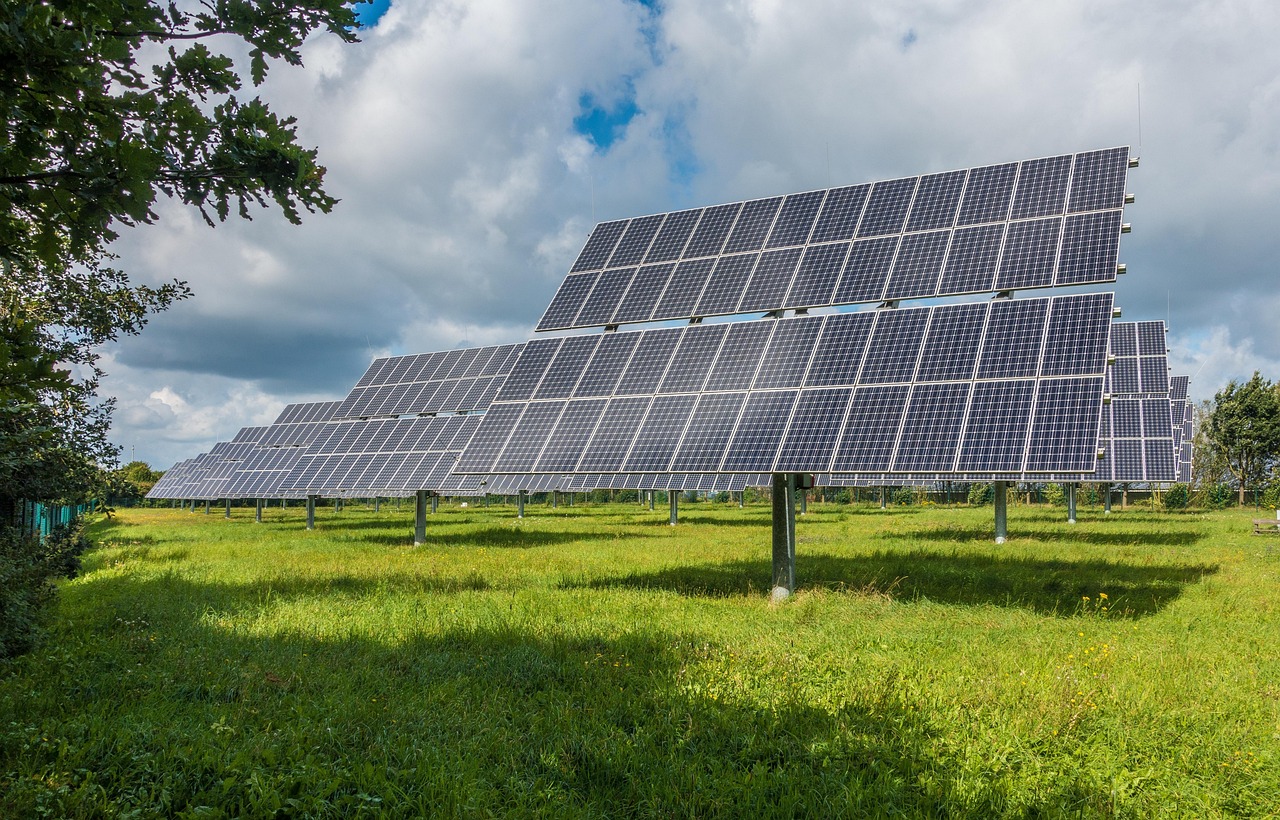
Computer vision for solar panel inspection is a multidisciplinary field that combines image processing, machine learning, and domain‑specific knowledge of photovoltaic (PV) systems. Mastery of the terminology is essential for anyone seeking to design, implement, or evaluate automated inspection solutions. The following sections present the most frequently encountered terms, organized by conceptual categories, and illustrate their meaning with practical examples drawn from real‑world solar farm operations.
Image – The fundamental data unit in vision systems. An image is a two‑dimensional array of pixels, each representing light intensity (for grayscale) or a combination of red, green, and blue values (for color). In solar inspection, images may be captured in the visible spectrum to assess soiling, or in the infrared band to locate hot spots caused by electrical faults.
Pixel – The smallest addressable element of an image. Pixel values are typically stored as 8‑bit integers ranging from 0 to 255 for each channel. High‑resolution cameras can produce images with millions of pixels, enabling detection of fine‑scale defects such as micro‑cracks that are only a few millimeters wide.
Resolution – The total number of pixels in an image, often expressed as width × height (e.G., 3840 × 2160). Resolution determines the level of detail that can be extracted; however, higher resolution also increases computational load and storage requirements.
Field of view – The angular extent of the observable scene captured by a camera. A wide field of view allows a single frame to cover many panels, reducing the number of images needed for a full‑site survey, while a narrow field of view provides higher spatial detail for close‑up defect analysis.
Depth of field – The range of distances within which objects appear acceptably sharp. In aerial inspections using UAV platforms, a large depth of field is desirable to keep the entire panel surface in focus despite variations in terrain elevation.
Image preprocessing – A set of operations applied to raw images before analysis. Common steps include noise reduction, contrast enhancement, geometric correction, and radiometric calibration. For infrared images, preprocessing often involves converting raw sensor readings to temperature values using the sensor’s calibration curve.
Noise reduction – Techniques such as Gaussian blurring or median filtering that suppress random variations in pixel intensity. In solar panel inspection, noise can obscure subtle crack patterns, so careful selection of filter parameters is required to preserve defect edges while removing sensor artifacts.
Contrast enhancement – Adjustments that stretch the intensity histogram to improve visibility of features. Histogram equalization is frequently used to reveal low‑contrast defects such as discoloration or early‑stage delamination.
Geometric correction – The process of rectifying distortions caused by lens curvature, perspective, or UAV motion. Orthorectification aligns images to a common coordinate system, enabling accurate mapping of defect locations onto the site layout.
Radiometric calibration – Converting raw digital numbers to physical units (e.G., Temperature in degrees Celsius). Proper calibration ensures that temperature differences between panels are meaningful, allowing reliable hot‑spot detection.
Annotation – The manual labeling of image regions with semantic information. Annotations may include bounding boxes around cracked cells, polygonal masks for delaminated areas, or point labels for hot spots. High‑quality annotations constitute the ground truth used to train supervised learning models.
Ground truth – The reference data that represents the true state of the scene. In solar inspection, ground truth may be derived from manual visual inspections, infrared thermography performed by experts, or electrical performance measurements (e.G., IV curve analysis). Ground truth is essential for evaluating model performance and for supervised learning.
Dataset – A collection of images, annotations, and metadata organized for training, validation, and testing. A typical solar inspection dataset is split into three subsets: training set, validation set, and test set. The training set is used to fit model parameters, the validation set monitors over‑fitting during training, and the test set provides an unbiased estimate of final performance.
Data augmentation – Synthetic transformations applied to training images to increase dataset diversity without collecting additional data. Common augmentations include rotation, scaling, horizontal flipping, brightness adjustment, and adding synthetic noise. For solar panels, augmentation must preserve physical realism; for example, flipping an image horizontally is acceptable because panel orientation is symmetric, whereas vertical flipping could produce an unrealistic upside‑down view.
Feature extraction – The process of deriving informative descriptors from raw pixel data. Traditional computer‑vision pipelines rely on handcrafted features such as edges, textures, and shape descriptors. In solar panel inspection, edge detectors highlight crack boundaries, while texture descriptors can differentiate between clean glass and soiled surfaces.
Edge detection – Algorithms that identify locations of rapid intensity change, indicating boundaries between different materials or defect regions. The Canny edge detector is widely used because it provides thin, well‑localized edges. In practice, edge detection is often combined with morphological operations to close gaps in crack lines.
Texture analysis – Methods that quantify the spatial arrangement of pixel intensities. Gray‑level co‑occurrence matrices (GLCM) and local binary patterns (LBP) are common texture descriptors. Texture analysis helps distinguish between a uniform solar cell surface and a region with accumulated dust or bird droppings.
Region of interest – The specific portion of an image that contains the panel(s) to be analyzed. Cropping to the region of interest reduces computational load and eliminates irrelevant background (e.G., Sky, vegetation). Automatic panel detection algorithms can generate ROIs by locating the rectangular grid formed by the panel array.
Object detection – A computer‑vision task that localizes and classifies objects within an image using bounding boxes. In solar inspection, object detection can be used to locate individual panels, inverters, or mounting structures. Modern object detectors such as YOLO, SSD, and Faster R‑CNN provide real‑time performance, which is valuable for on‑board UAV processing.
Semantic segmentation – The pixel‑wise classification of an image into predefined categories (e.G., Panel, background, defect). Unlike object detection, semantic segmentation assigns a class label to every pixel, enabling precise delineation of defect boundaries. Fully convolutional networks (FCNs) and encoder‑decoder architectures like U‑Net are popular choices for this task.
Instance segmentation – Extends semantic segmentation by distinguishing between separate instances of the same class. For example, two adjacent cracked panels would be labeled as distinct instances, allowing quantitative assessment of each panel’s defect severity. Models such as Mask R‑CNN combine object detection and segmentation to achieve this functionality.
Convolutional neural network – A deep‑learning architecture that automatically learns hierarchical feature representations from raw images. Convolutions exploit spatial locality, making CNNs highly effective for visual pattern recognition. In solar panel inspection, CNNs can be trained to recognize cracks, hot spots, and soiling directly from image data.
Transfer learning – The technique of initializing a model with weights pre‑trained on a large, generic dataset (e.G., ImageNet) and fine‑tuning it on a domain‑specific dataset. Transfer learning accelerates convergence and often improves accuracy when the solar inspection dataset is limited. Practitioners frequently replace the final classification layer with a new layer that matches the number of defect categories.
Training – The iterative process of adjusting model parameters to minimize a loss function on the training set. Optimization algorithms such as stochastic gradient descent (SGD) or Adam are used to navigate the high‑dimensional parameter space. Early stopping, based on performance on the validation set, helps prevent over‑fitting.
Loss function – A quantitative measure of the discrepancy between the model’s predictions and the ground truth. For classification tasks, cross‑entropy loss is common; for segmentation, the Dice loss or focal loss may be preferred to address class imbalance (e.G., Defects occupy a small fraction of the image).
Over‑fitting – When a model learns to reproduce the training data too closely, capturing noise rather than the underlying patterns. Over‑fitted models perform poorly on unseen data. Regularization techniques such as dropout, weight decay, and data augmentation mitigate this risk.
Validation set – A subset of the data used to evaluate model performance during training. Validation metrics guide hyperparameter tuning (learning rate, batch size, network depth) and model selection. Because the validation set is not used for gradient updates, it provides an unbiased estimate of generalization capability.
Test set – A final, held‑out dataset that is only evaluated after the model has been fully trained. Test results are reported in research papers and project deliverables to demonstrate real‑world applicability. For solar panel inspection, the test set should include diverse lighting conditions, panel ages, and defect types to reflect operational variability.
Evaluation metrics – Quantitative measures that summarize model performance. Common metrics for defect detection include precision, recall, F1 score, and intersection over union (IoU). Precision quantifies the proportion of predicted defects that are true defects, while recall measures the proportion of true defects that were detected. The F1 score balances the two, and IoU assesses the overlap between predicted and ground‑truth segmentation masks.
Precision = TP / (TP + FP) Recall = TP / (TP + FN) F1 score = 2·(Precision·Recall) / (Precision + Recall)
Where TP, FP, and FN denote true positives, false positives, and false negatives, respectively. In solar inspections, a high recall is often prioritized because missing a faulty panel can lead to lost energy production, but an excessively low precision would generate many false alarms, increasing maintenance costs.
Intersection over union – Calculated as the area of overlap between the predicted mask and the ground‑truth mask divided by the area of their union. IoU thresholds (e.G., 0.5) Are used to decide whether a detection counts as a true positive. For fine‑grained crack segmentation, higher IoU thresholds (0.75) May be required to ensure accurate defect delineation.
Confusion matrix – A tabular representation of classification outcomes for each class. The matrix facilitates the computation of per‑class precision, recall, and overall accuracy. In multi‑class solar defect classification (e.G., Crack, hot spot, soiling, no defect), the confusion matrix highlights which defect categories are most frequently misidentified.
Real‑time processing – The ability to analyze image frames at or faster than the acquisition rate, typically measured in frames per second (fps). Real‑time capabilities are crucial for on‑board UAV inspection, where bandwidth constraints may limit the transmission of raw video to a ground station. Lightweight models such as MobileNet or EfficientDet are often deployed for this purpose.
Inference – The stage where a trained model is applied to new, unseen data to generate predictions. Inference speed depends on model complexity, hardware acceleration (GPU, TPU, or edge‑AI chips), and input resolution. Optimizations such as model quantization (reducing 32‑bit floating‑point weights to 8‑bit integers) can dramatically increase inference throughput with minimal accuracy loss.
Thermal imaging – Capturing infrared radiation emitted by objects to infer temperature distribution. Infrared cameras mounted on UAVs can detect hot spots caused by cell failures, shading, or connection issues. Thermal images typically have lower spatial resolution than visible‑light images, so fusion techniques that combine thermal and RGB data can improve defect localization.
Multispectral imaging – Acquiring images at multiple wavelength bands (e.G., Visible, near‑infrared, short‑wave infrared). Multispectral data can reveal material properties not evident in a single band, such as moisture ingress behind the glass. In solar panel inspection, multispectral fusion helps differentiate between soiling (which appears dark in visible light but may be invisible in infrared) and delamination (which may alter the thermal signature).
Fusion – The process of integrating information from different sensors or modalities. Pixel‑level fusion merges channels into a single tensor before feeding it to a CNN, while decision‑level fusion combines separate model outputs (e.G., An RGB‑based crack detector and an infrared hot‑spot detector) using logical rules or a meta‑classifier. Fusion improves robustness to varying environmental conditions.
UAV – Unmanned aerial vehicle, commonly referred to as a drone. UAVs equipped with high‑resolution cameras and gimbals can rapidly survey large solar farms, capturing images from optimal angles and distances. Flight planning software defines waypoints, altitude, and overlap to ensure complete coverage and consistent image quality.
Fixed‑mount – Ground‑based camera installations that continuously monitor a specific section of a solar array. Fixed‑mount systems are useful for long‑term trend analysis, early detection of gradual soiling, and automated alerts when temperature anomalies exceed predefined thresholds.
Gimbal – A stabilization platform that maintains camera orientation despite UAV motion. Gimbal control reduces motion blur and keeps the panel surface perpendicular to the optical axis, which is essential for accurate geometric correction and reliable defect detection.
Calibration board – A patterned target (often a checkerboard) used to compute intrinsic camera parameters (focal length, principal point, distortion coefficients). Calibration is performed before field deployment to correct lens distortion, which otherwise introduces systematic errors in defect size estimation.
Intrinsic parameters – Camera properties that describe how 3D points are projected onto the image sensor. They include focal length, principal point, and radial/tangential distortion coefficients. Accurate intrinsic parameters enable the conversion of pixel measurements to real‑world dimensions, allowing, for example, the estimation of crack length in millimeters.
Extrinsic parameters – The pose of the camera relative to a world coordinate system, expressed as rotation and translation vectors. Extrinsic parameters are required for mapping detected defects onto the geographic layout of the solar farm, facilitating maintenance crew routing.
Photogrammetry – The science of obtaining 3D measurements from overlapping 2D images. By processing multiple UAV images with structure‑from‑motion (SfM) algorithms, a dense point cloud of the solar array can be generated. Photogrammetry provides elevation data that helps identify panel sagging or mounting failures, complementing defect detection.
Structure from motion – An algorithmic pipeline that reconstructs camera poses and a sparse 3D point cloud from a set of overlapping images. SfM is the first step in creating a georeferenced orthomosaic, which serves as a base map for overlaying defect annotations.
Orthomosaic – A seamless, geometrically corrected image composed of many overlapping aerial photographs. Orthomosaics present the solar farm as a flat map, eliminating perspective distortion. Defect locations can be plotted directly on the orthomosaic, enabling visual inspection by engineers and integration with GIS systems.
Geographic information system – Software that stores, analyzes, and visualizes spatial data. GIS platforms can ingest orthomosaics, defect shapefiles, and panel geometry to produce maintenance schedules, risk heatmaps, and performance dashboards. Integration with GIS is a common requirement for commercial solar asset management.
Hot spot detection – Identifying localized temperature elevations that indicate electrical problems. Hot spots are typically detected in thermal images using thresholding techniques (e.G., Pixels exceeding a temperature delta from the panel’s average) or by applying a CNN trained on annotated thermal data. Early hot‑spot detection prevents irreversible cell damage.
Crack detection – Locating linear discontinuities on the panel surface. Cracks appear as dark lines in visible images and may cause increased series resistance, reducing power output. CNNs trained on high‑resolution RGB images can learn to differentiate cracks from shadows or dirt patterns.
Delamination detection – Recognizing separation between the glass and encapsulant layers. Delamination often manifests as subtle texture changes and may alter the thermal emissivity, appearing as faint temperature gradients in infrared images. Combining texture features with thermal cues improves detection reliability.
Soiling assessment – Quantifying the amount of dust, bird droppings, or other contaminants covering the panels. Soiling reduces light transmission and can be estimated by measuring the reduction in reflected intensity relative to a clean reference panel. Machine‑learning models can predict soiling severity from RGB images, enabling targeted cleaning schedules.
Shading analysis – Evaluating the impact of shadows cast by nearby objects (e.G., Trees, structures) on panel performance. Shading can be detected by analyzing the intensity distribution across the panel surface; shadows produce abrupt intensity drops. Time‑series analysis of shading patterns helps optimize panel layout or suggest pruning actions.
Performance ratio – A metric that compares actual energy output to the theoretical output under standard test conditions. While not a direct computer‑vision term, the performance ratio provides a quantitative link between visual defects and energy loss, supporting the business case for automated inspection.
Root cause analysis – The process of tracing observed defects back to underlying causes (e.G., Manufacturing flaw, mechanical stress, environmental exposure). Computer‑vision outputs (defect maps, hot‑spot locations) feed into root‑cause models that incorporate weather data, installation logs, and maintenance history.
Edge computing – Deploying inference models on the UAV or on‑site edge devices rather than sending raw images to a cloud server. Edge computing reduces latency, conserves bandwidth, and enhances data privacy. Devices such as NVIDIA Jetson, Google Coral, or Intel Movidius VPU are commonly used for on‑board solar inspection inference.
Cloud processing – Off‑loading heavy computational tasks to remote servers. Cloud platforms provide scalable resources for training large CNNs, performing batch inference on thousands of images, and storing long‑term datasets. Hybrid architectures often combine edge pre‑processing with cloud‑based deep analysis.
OpenCV – An open‑source library that offers a wide range of computer‑vision functions, from basic image I/O to advanced feature detection. In solar panel inspection pipelines, OpenCV is frequently used for preprocessing, contour extraction, and morphological operations before feeding data to deep‑learning models.
TensorFlow – A popular deep‑learning framework that supports model development, training, and deployment across CPUs, GPUs, and TPUs. TensorFlow’s Keras API simplifies the construction of CNNs for defect classification, while the TensorFlow Lite converter enables model quantization for edge deployment.
PyTorch – Another leading deep‑learning library known for its dynamic computation graph and strong research community. PyTorch is often chosen for experimenting with novel architectures (e.G., Attention‑based segmentation) and for integrating with custom loss functions tailored to solar defect detection.
Model quantization – Reducing the numerical precision of model parameters to lower memory footprint and accelerate inference. Post‑training quantization can convert a 32‑bit model to an 8‑bit integer version, which on many edge devices yields a 2‑4× speedup with negligible loss in defect detection accuracy.
Pruning – Removing redundant or less important network weights to create a smaller, faster model. Structured pruning eliminates entire filters or channels, preserving the overall network topology. Pruned models are valuable for UAV applications where power and compute resources are limited.
Explainability – Techniques that provide insight into how a model makes decisions. Visualization tools such as Grad‑CAM highlight image regions that most influence a CNN’s prediction, helping engineers verify that the model focuses on actual cracks rather than irrelevant background. Explainability is increasingly required for regulatory compliance in critical infrastructure monitoring.
Domain adaptation – Adjusting a model trained on one data distribution (e.G., Sunny weather) to perform well on another (e.G., Cloudy or snowy conditions). Methods include fine‑tuning with a small set of target‑domain images, adversarial training, or style transfer to normalize illumination differences.
Class imbalance – A situation where defect samples are far fewer than non‑defect samples. In solar inspection, most panels are healthy, leading to a skewed dataset. Strategies to address imbalance include oversampling defect images, using focal loss, or assigning higher class weights in the loss function.
Label noise – Errors in the annotation process, such as inaccurate bounding boxes or misclassified defect types. Label noise can degrade model performance, especially in deep networks that fit to spurious patterns. Quality control procedures—double‑annotation, consensus voting, and review by domain experts—help mitigate label noise.
Batch size – The number of training samples processed before the model’s parameters are updated. Larger batch sizes improve GPU utilization but may reduce the stochasticity that helps escape local minima. In solar defect detection, batch size selection balances hardware constraints with convergence speed.
Learning rate – A hyperparameter that controls the magnitude of weight updates during training. Learning rate schedules (e.G., Step decay, cosine annealing) are employed to fine‑tune convergence. Too high a learning rate can cause divergence, while too low a rate leads to excessively long training times.
Epoch – One complete pass through the entire training dataset. Multiple epochs are required to fully learn the mapping from images to defect labels. Early stopping monitors validation loss after each epoch and halts training when improvement plateaus, preventing over‑fitting.
Regularization – Techniques that constrain model complexity to improve generalization. Common regularization methods include dropout (randomly disabling neurons during training), L2 weight decay, and data augmentation. In solar panel inspection, regularization is essential because the visual diversity of defects is limited.
Hyperparameter tuning – The process of selecting optimal values for parameters such as learning rate, batch size, network depth, and augmentation strength. Automated tools like grid search, random search, or Bayesian optimization can systematically explore the hyperparameter space.
Cross‑validation – A statistical method that partitions the dataset into multiple folds, training and validating the model on different subsets to obtain a more robust performance estimate. While k‑fold cross‑validation is standard in many machine‑learning tasks, solar inspection pipelines often rely on a single hold‑out validation set due to the high cost of annotation.
Pipeline – The sequential arrangement of processing steps from raw data acquisition to final defect reporting. A typical solar inspection pipeline includes image capture, preprocessing, panel detection, defect segmentation, post‑processing (e.G., Morphological cleaning), and report generation. Modular pipeline design facilitates experimentation and reuse of components.
Post‑processing – Operations applied after model inference to refine results. Examples include morphological closing to fill gaps in crack masks, size filtering to discard detections smaller than a physical threshold, and clustering to group nearby hot spots into a single maintenance ticket.
Report generation – Translating detection results into actionable information for maintenance teams. Reports may contain maps with defect icons, severity scores, estimated energy loss, and recommended actions (e.G., Cleaning, cell replacement). Automated PDF or GIS layer creation streamlines workflow integration.
Maintenance scheduling – Using inspection outputs to prioritize repair crews. Defects with high severity (e.G., Large hot spots) are scheduled first, while minor soiling may be addressed during routine cleaning. Optimization algorithms can generate routes that minimize travel time across the solar farm.
Energy loss estimation – Converting visual defect metrics into predicted power reduction. Empirical models correlate crack length, hot‑spot temperature delta, and soiling index with efficiency loss. Accurate loss estimation justifies inspection investments and supports warranty claims.
Regulatory compliance – Many jurisdictions require documented inspection records for large solar installations. Computer‑vision systems must produce audit‑ready logs, including timestamps, geolocation, camera settings, and model version information, to satisfy regulatory audits.
Scalability – The ability of the inspection solution to handle increasing numbers of panels, higher image resolutions, or additional sensor modalities. Cloud‑based training pipelines, distributed inference across multiple UAVs, and modular software architecture contribute to scalable deployments.
Robustness – The capacity of the model to maintain performance under varying environmental conditions, such as changes in illumination, temperature, or atmospheric haze. Robustness is enhanced through diverse training data, domain adaptation, and sensor fusion.
Latency – The time elapsed between image capture and defect reporting. Low latency is critical for safety‑critical applications (e.G., Detecting fire‑hazard hot spots) and for enabling on‑site decision making. Edge computing and model optimization are primary levers for reducing latency.
Throughput – The number of images processed per unit time. High throughput is required for large solar farms where thousands of panels must be inspected in a single flight. Parallel processing on GPU clusters or batch inference on edge devices can increase throughput.
Security – Protecting inspection data from unauthorized access or tampering. Encryption of image transmission, secure storage of model weights, and authentication mechanisms for UAV control systems are standard security practices.
Privacy – While solar farms are generally public, some installations may be located on private property. Data handling policies must respect landowner privacy, especially when high‑resolution imagery could capture unrelated structures or personnel.
Environmental factors – Weather conditions, wind speed, and ambient temperature affect image quality and UAV stability. Planning inspections during clear, low‑wind periods improves data consistency and reduces the likelihood of motion blur or misalignment.
Operational challenges – Practical difficulties encountered during field deployments. These include battery limitations of UAVs, the need for regular calibration of thermal cameras, regulatory restrictions on drone flight altitude, and the logistics of coordinating inspections across multiple sites.
Future directions – Emerging research areas that promise to enhance solar panel inspection. These include the integration of hyperspectral imaging for material degradation analysis, the use of transformer‑based architectures for long‑range context modeling, and the development of self‑supervised learning methods that reduce reliance on manually annotated data.
By mastering the terminology outlined above, learners will be equipped to navigate the complex landscape of computer‑vision‑driven solar panel inspection. The concepts form a cohesive vocabulary that supports the design of robust, accurate, and scalable solutions capable of maintaining the reliability and efficiency of renewable‑energy assets.
Key takeaways
- The following sections present the most frequently encountered terms, organized by conceptual categories, and illustrate their meaning with practical examples drawn from real‑world solar farm operations.
- In solar inspection, images may be captured in the visible spectrum to assess soiling, or in the infrared band to locate hot spots caused by electrical faults.
- High‑resolution cameras can produce images with millions of pixels, enabling detection of fine‑scale defects such as micro‑cracks that are only a few millimeters wide.
- Resolution determines the level of detail that can be extracted; however, higher resolution also increases computational load and storage requirements.
- A wide field of view allows a single frame to cover many panels, reducing the number of images needed for a full‑site survey, while a narrow field of view provides higher spatial detail for close‑up defect analysis.
- In aerial inspections using UAV platforms, a large depth of field is desirable to keep the entire panel surface in focus despite variations in terrain elevation.
- For infrared images, preprocessing often involves converting raw sensor readings to temperature values using the sensor’s calibration curve.