
Autonomous Systems in Wind Farms
Autonomous system in the context of wind farms refers to a collection of hardware and software components that operate with minimal human intervention to monitor, control, and optimise the performance of turbines and associated infrastructu…
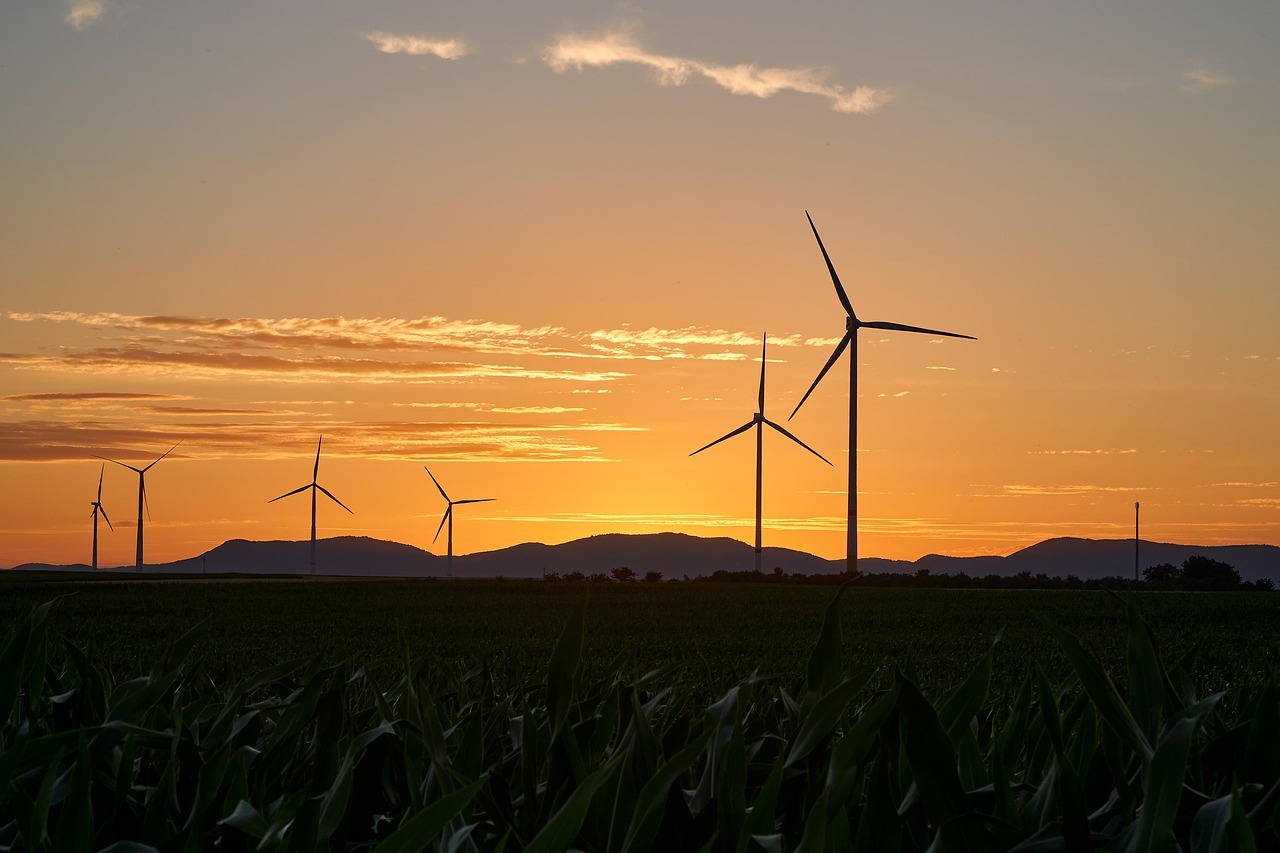
Autonomous system in the context of wind farms refers to a collection of hardware and software components that operate with minimal human intervention to monitor, control, and optimise the performance of turbines and associated infrastructure. These systems combine sensor networks, edge computing, artificial intelligence (AI) algorithms, and communication protocols to create a self‑managing ecosystem. The primary goal is to increase energy production, reduce downtime, and lower operating costs while maintaining safety and regulatory compliance.
Supervisory Control and Data Acquisition (SCADA) is the foundational platform that aggregates real‑time data from turbine controllers, weather stations, and ancillary equipment. SCADA provides the raw telemetry—such as rotor speed, blade pitch angle, generator temperature, and power output—that feeds into higher‑level autonomous decision engines. Modern SCADA implementations support high‑frequency sampling (often 1 Hz or greater) and incorporate redundancy to assure data integrity even during harsh weather events.
Edge computing describes the processing of data close to its source, typically on‑site at the turbine or within a hub‑level gateway. By executing AI models on edge devices, latency is reduced, enabling rapid responses to transient conditions like gusts, turbulence, or fault signatures. Edge nodes often run lightweight inference engines that can trigger local actions—such as adjusting blade pitch or initiating a controlled shutdown—without waiting for cloud‑based analysis.
Digital twin is a virtual replica of a physical turbine or an entire wind farm. The twin continuously synchronises with live sensor feeds, allowing operators to simulate scenarios, predict wear, and test control strategies in a risk‑free environment. Machine‑learning models trained on historical data improve the fidelity of the twin, making it a powerful tool for predictive maintenance and performance optimisation.
Predictive maintenance leverages statistical and AI techniques to forecast component failures before they occur. By analysing vibration spectra, oil analysis results, and temperature trends, the system can schedule maintenance activities during planned outages, minimising lost production. Techniques such as recurrent neural networks (RNNs) and gradient‑boosted trees are commonly employed to capture temporal dependencies in sensor data.
Condition monitoring is the ongoing observation of turbine health indicators. Sensors like accelerometers, strain gauges, and acoustic emission detectors provide high‑resolution data that can reveal incipient faults such as bearing wear, gearbox tooth damage, or blade leading‑edge erosion. Condition‑monitoring algorithms often use signal‑processing methods—Fast Fourier Transform (FFT), wavelet analysis, and spectral kurtosis—to extract diagnostic features.
Blade pitch control is a critical actuation mechanism that adjusts the angle of turbine blades to regulate aerodynamic load and power output. Autonomous systems dynamically modify pitch based on wind speed, direction, turbulence intensity, and grid demand. Advanced pitch‑control strategies incorporate AI‑driven optimisation that balances energy capture with structural fatigue reduction.
Yaw control rotates the nacelle to align the rotor plane with the prevailing wind direction. Accurate yaw positioning is essential for maximising power capture and reducing asymmetric loading. Autonomous yaw systems use lidar or ultrasonic anemometers to predict wind direction ahead of the rotor, allowing pre‑emptive adjustments that improve efficiency.
Wind resource assessment involves the statistical analysis of wind speed, direction, and turbulence characteristics at a potential site. Autonomous systems integrate on‑site measurements with mesoscale weather models to refine forecasts. High‑resolution forecasts enable the farm to participate in ancillary services markets, such as frequency regulation, by offering flexible generation capacity.
Energy storage integration refers to coupling batteries, supercapacitors, or pumped‑hydro facilities with the wind farm to smooth output variability. Autonomous controllers decide when to store excess generation and when to discharge, based on price signals, grid constraints, and forecasted wind conditions. This capability expands the farm’s market participation and enhances reliability.
Grid code compliance encompasses the set of technical standards that a wind farm must meet to connect to the electrical grid. Autonomous systems continuously monitor voltage, frequency, harmonic distortion, and fault ride‑through capability. When a deviation is detected, the system can automatically adjust reactive power injection or curtail output to remain within permissible limits.
Fault detection and isolation (FDI) is a methodology that identifies abnormal system states and determines the root cause. FDI algorithms often combine model‑based approaches—such as parity equations derived from turbine dynamics—with data‑driven classifiers. Once a fault is isolated, the autonomous controller can initiate protective actions, such as tripping a generator or engaging a backup system.
Cyber‑physical security addresses the protection of both digital and physical assets against malicious threats. Wind farms employ encryption, authentication, and intrusion‑detection systems to safeguard communication links between turbines, control centres, and cloud services. Autonomous security agents continuously monitor network traffic for anomalies, applying machine‑learning‑based threat detection to mitigate attacks in real time.
Machine learning (ML) is a subset of AI that enables computers to learn patterns from data without explicit programming. In wind farm autonomy, ML models predict power curves, estimate remaining useful life of components, and optimise control set‑points. Supervised learning techniques, such as support vector machines (SVMs) and random forests, are used for classification tasks, while unsupervised methods like clustering help identify abnormal operating regimes.
Reinforcement learning (RL) is an ML paradigm where an agent learns to make sequential decisions by receiving rewards or penalties from the environment. RL agents have been deployed to optimise turbine pitch and yaw strategies, balancing short‑term power output against long‑term structural fatigue. The reward function typically incorporates energy production, wear cost, and compliance penalties.
Neural network inference is the process of applying a trained neural network model to new data to generate predictions. In edge computing scenarios, inference must be performed within strict latency budgets and limited computational resources. Techniques such as quantisation, pruning, and model compression reduce the memory footprint, enabling deployment on embedded processors.
Data acquisition system (DAQ) is the hardware responsible for converting analog sensor signals into digital data streams. High‑resolution analog‑to‑digital converters (ADCs) capture subtle variations in vibration, temperature, and pressure. The DAQ often includes buffering and timestamping capabilities to preserve data synchronisation across multiple turbines.
Time‑synchronised data ensures that measurements from disparate sensors can be correlated accurately. Protocols such as Precision Time Protocol (PTP) or Network Time Protocol (NTP) distribute a common clock reference throughout the wind farm network. Accurate timestamps are essential for diagnostic algorithms that analyse cause‑and‑effect relationships across the system.
Data fusion combines information from heterogeneous sources—such as lidar wind profiles, SCADA telemetry, and maintenance logs—to produce a richer representation of the farm’s state. Fusion techniques range from simple weighted averaging to Bayesian filters that explicitly model uncertainty. The fused dataset serves as the input for higher‑level decision‑making algorithms.
Cloud analytics refers to the use of remote computing platforms to perform large‑scale data processing, model training, and long‑term trend analysis. While edge devices handle immediate control actions, cloud resources provide the computational horsepower needed for deep‑learning training, scenario simulation, and fleet‑wide benchmarking. Secure APIs enable seamless data transfer between on‑site systems and cloud services.
Internet of Things (IoT) describes the network of interconnected sensors, actuators, and controllers that form the backbone of autonomous wind farms. IoT standards such as MQTT, OPC UA, and IEC 61850 define communication semantics, quality of service, and data models. By adhering to these standards, equipment from different manufacturers can interoperate within a unified control architecture.
IEC 61400‑25 is an international standard that specifies communication protocols and information models for wind turbine monitoring and control. Compliance with IEC 61400‑25 enables plug‑and‑play integration of new sensors, facilitates remote diagnostics, and simplifies upgrades. Autonomous systems rely on the standardized data structures to interpret turbine status consistently.
Fault‑tolerant architecture designs the autonomous system to continue operating despite component failures. Redundant pathways, hot‑standby processors, and graceful degradation strategies ensure that critical functions—such as safety shutdowns and power curtailment—remain available. Fault‑tolerant designs are validated through fault‑injection testing and reliability modelling.
Model predictive control (MPC) is a control technique that solves an optimisation problem at each control interval, predicting future system behaviour over a finite horizon. In wind turbines, MPC can simultaneously consider aerodynamic loads, actuator limits, and grid constraints to compute optimal pitch and torque commands. The optimisation problem is solved using quadratic programming or interior‑point methods, often accelerated by specialised hardware.
Load mitigation strategies aim to reduce the mechanical stresses experienced by turbine components during high‑wind events. Techniques include active pitch control, torque limiting, and coordinated yaw manoeuvres. Autonomous systems evaluate real‑time wind measurements and forecasted gusts to decide when to invoke mitigation, thereby extending component life.
Wake effect describes the reduction in wind speed and increase in turbulence downstream of a turbine, affecting the performance of neighboring units. Autonomous farm‑wide controllers model wake interactions using computational fluid dynamics (CFD) or simplified analytical models such as the Jensen or Frandsen equations. By adjusting the operating points of upstream turbines, the overall farm energy capture can be maximised.
Farm‑level optimisation expands control beyond a single turbine to the entire collection of units. The optimisation problem includes variables such as individual blade pitch, yaw angles, and power set‑points, while respecting constraints like wake interactions, grid codes, and maintenance schedules. Distributed optimisation algorithms—such as consensus‑based methods—allow each turbine to compute its own contribution while converging to a global optimum.
Dynamic line rating (DLR) is a technique that assesses the real‑time capacity of transmission lines based on ambient temperature, wind speed, and solar radiation. Autonomous wind farms can adjust output to match the available transmission capacity, avoiding curtailment and reducing congestion. Integration of DLR data into the farm’s control logic requires reliable communication with the grid operator’s monitoring system.
Frequency regulation services involve adjusting power output in response to short‑term fluctuations in grid frequency. Autonomous turbines can provide primary frequency response by rapidly modulating rotor speed or secondary response through coordinated control with storage assets. The control algorithms must respect turbine mechanical limits while delivering the required response within seconds.
Voltage support is achieved by controlling reactive power injection or absorption. Modern wind turbines are equipped with power converters capable of independent reactive power control, allowing them to raise or lower local voltage levels as needed. Autonomous controllers use voltage measurements and grid codes to determine the appropriate reactive power set‑point.
Hybrid renewable system combines wind generation with other renewable sources such as solar PV, biomass, or hydro. Autonomous management of a hybrid system involves coordinating the dispatch of each technology to meet load, optimise revenue, and maintain reliability. Machine‑learning forecasts for solar irradiance and wind speed feed into a joint optimisation framework.
Energy management system (EMS) is the software layer that orchestrates generation, storage, and demand‑side resources. The EMS receives forecasts, market prices, and grid signals, then computes schedules for each asset. In an autonomous wind farm, the EMS may be tightly integrated with turbine controllers, allowing real‑time adjustments to align with market opportunities.
Smart sensor combines sensing, preprocessing, and communication capabilities within a single compact device. For example, a smart vibration sensor may perform on‑board FFT analysis, detect abnormal frequency peaks, and transmit only the relevant alerts to the edge node. This reduces bandwidth usage and accelerates fault detection.
Telemetry latency denotes the delay between a physical event at the turbine and the receipt of the corresponding data by the control system. High latency can impair the effectiveness of fast‑acting control loops. Edge computing and local inference reduce latency by keeping critical decisions on the turbine or at the nearest hub.
Bandwidth management involves prioritising data streams to ensure that essential control information receives sufficient network capacity. Techniques such as Quality of Service (QoS) tagging and data compression are employed to allocate bandwidth dynamically, especially in remote sites where satellite links impose strict limits.
Software‑defined networking (SDN) abstracts the network control plane from the hardware, allowing programmable routing and policy enforcement. In autonomous wind farms, SDN can be used to isolate safety‑critical traffic, implement dynamic firewalls, and reroute data around failed switches, thereby enhancing reliability and security.
Digital signal processing (DSP) is the manipulation of sensor signals to extract useful information. DSP algorithms such as band‑pass filtering, notch filtering, and envelope detection are integral to condition monitoring pipelines. Implementations often run on dedicated DSP chips or on general‑purpose processors with real‑time operating systems.
Real‑time operating system (RTOS) provides deterministic scheduling guarantees required for time‑critical control tasks. An RTOS ensures that high‑priority tasks—such as pitch actuation commands—are executed within strict deadlines, while lower‑priority tasks like data logging run in the background. Popular RTOS choices include VxWorks, FreeRTOS, and QNX.
Fault‑tree analysis (FTA) is a systematic method for identifying potential failure modes and their logical relationships. The analysis produces a diagram that maps basic events to top‑level system failures. Autonomous wind farms use FTA to prioritise monitoring of critical components and to design redundancy strategies.
Reliability centred maintenance (RCM) is a maintenance philosophy that focuses resources on assets whose failure would have the greatest impact on safety, availability, or cost. RCM integrates failure mode effects analysis (FMEA) with condition‑monitoring data to schedule inspections, part replacements, and overhauls in a risk‑based manner.
Health index quantifies the overall condition of a turbine or component on a scale from 0 (failed) to 1 (excellent). The index is derived from multiple sensor inputs and machine‑learning predictions. Operators use the health index to prioritise maintenance crews, allocate spare parts, and forecast downtime.
Asset management platform consolidates all information related to turbines, contracts, spare parts, and maintenance history. Autonomous systems feed real‑time performance metrics into the platform, enabling analytics such as lifecycle cost modelling, depreciation tracking, and investment planning.
Regulatory reporting requires wind farm operators to submit performance, emissions, and compliance data to authorities. Automated reporting modules pull data from SCADA and EMS, apply the required formatting, and transmit the reports via secure channels. This reduces administrative burden and improves data accuracy.
Machine‑vision inspection uses high‑resolution cameras and computer‑vision algorithms to detect surface defects on blades, towers, and nacelles. Drones equipped with vision systems can autonomously navigate around turbines, capture images, and analyse them for erosion, cracks, or lightning strike damage. The inspection results are fed into the maintenance planning workflow.
Lightning protection system (LPS) includes receptors, conductors, and grounding structures designed to safely channel lightning strikes away from turbine components. Autonomous monitoring of LPS status involves measuring resistance, detecting surge currents, and verifying the continuity of grounding paths. Faults in the LPS are flagged for immediate repair to prevent catastrophic damage.
Acoustic emission monitoring captures high‑frequency stress waves generated by crack growth or material fatigue. Sensors placed on critical bearings or gearbox housings detect acoustic events, which are then classified using pattern‑recognition algorithms. Early detection of acoustic signatures can prevent catastrophic gearbox failure.
Predictive analytics dashboard visualises forecasts, health indices, and maintenance recommendations for operators. The dashboard integrates AI outputs with traditional KPIs, allowing users to drill down into individual turbine performance, compare actual versus predicted output, and assess the impact of upcoming maintenance actions.
Scenario planning involves creating multiple future states based on variations in wind resource, market prices, and regulatory changes. Autonomous systems can evaluate each scenario using Monte Carlo simulations, providing probabilistic assessments of revenue, risk, and required capital investments.
Digital transformation roadmap outlines the steps required to evolve a conventional wind farm into a fully autonomous operation. The roadmap typically includes phases such as sensor deployment, data platform establishment, AI model development, edge‑to‑cloud integration, and workforce upskilling. Milestones are defined to track progress and ROI.
Human‑in‑the‑loop design ensures that critical decisions—especially those involving safety shutdowns or major re‑configurations—require operator approval. While autonomous algorithms propose actions, the interface presents concise rationale, confidence levels, and potential consequences, allowing the operator to intervene if necessary.
Explainable AI (XAI) techniques generate human‑readable explanations for model predictions. In wind farm autonomy, XAI helps operators understand why a particular turbine was flagged for inspection or why a pitch adjustment was recommended. Methods such as SHAP values or rule‑extraction provide transparency, building trust in the system.
Transfer learning enables a model trained on data from one turbine or farm to be adapted to another with limited additional data. By re‑using learned feature representations, transfer learning reduces the time and computational resources required to deploy AI solutions across a fleet of heterogeneous turbines.
Data governance establishes policies for data ownership, quality, privacy, and lifecycle management. Autonomous wind farms must define who can access raw sensor data, how long it is retained, and how it is anonymised for compliance with regulations such as GDPR. Robust governance ensures data reliability for AI training and auditing.
Cyber‑physical system (CPS) is the overarching concept that integrates computation, networking, and physical processes. In a wind farm, the CPS includes turbines, sensors, controllers, communication infrastructure, and the AI algorithms that coordinate them. CPS design principles emphasise tight coupling, real‑time constraints, and resilience to disturbances.
Fault‑tolerant communication protocols employ error‑checking, retransmission, and redundant pathways to maintain data flow during network disruptions. Protocols such as IEC 61850‑MMS and DNP3 incorporate features like sequence numbers and acknowledgement messages, ensuring that critical control commands reach their destination reliably.
Adaptive learning refers to models that continue to update their parameters as new data becomes available, without requiring a full retraining cycle. In autonomous wind farms, adaptive learning allows the prediction of blade degradation to evolve with changing environmental conditions, improving accuracy over the turbine’s lifespan.
Energy yield modelling predicts the amount of electricity a turbine or farm will generate over a given period, based on wind resource data, turbine characteristics, and loss factors (wake, electrical, availability). Accurate yield models are essential for financial planning, power purchase agreements, and performance guarantees.
Loss factor quantifies the proportion of potential energy that is not captured due to various inefficiencies—such as wake interaction, electrical resistance, or downtime. Autonomous optimisation seeks to minimise loss factors by adjusting operating strategies, scheduling maintenance at optimal times, and fine‑tuning control parameters.
Wind turbine controller implements the low‑level algorithms that manage rotor speed, pitch, yaw, and generator torque. Modern controllers run on digital signal processors and support modular software architectures, allowing updates to control laws without hardware changes. Autonomous systems interface with the controller through standardised APIs.
Power curve is a characteristic graph that relates wind speed to electrical output for a given turbine model. Deviations from the expected power curve can indicate performance degradation, sensor errors, or control issues. Autonomous analytics continuously compare measured output against the theoretical curve to detect anomalies.
Capacity factor is the ratio of actual energy produced over a period to the theoretical maximum if the turbine operated at rated power continuously. Autonomous optimisation aims to raise the capacity factor by reducing downtime, improving wake management, and exploiting favorable wind periods.
Load spectrum represents the distribution of mechanical loads experienced by turbine components over time. By analysing the load spectrum, engineers can assess fatigue life and design appropriate mitigation strategies. Autonomous systems generate load spectra in near‑real time using sensor data and simulation models.
Fatigue analysis evaluates the cumulative damage caused by cyclic loading, employing methods such as rainflow counting and Miner’s rule. AI‑enhanced fatigue models incorporate real‑time load measurements to update remaining life estimates, supporting proactive maintenance scheduling.
Structural health monitoring (SHM) encompasses a suite of sensors and algorithms that track the integrity of turbine structures—blades, tower, and foundation. SHM systems use strain gauges, accelerometers, and fibre‑optic sensors to detect changes in stiffness, deformation, or resonance frequencies that may indicate damage.
Digital maintenance log records all interventions, inspections, and component replacements in a searchable, time‑stamped format. Integration with autonomous diagnostics ensures that each fault detection event is automatically logged, creating a comprehensive history for future analysis.
Regenerative braking converts kinetic energy from the rotor into electrical energy during deceleration phases, feeding it back into the grid or storage system. Autonomous controllers decide when to engage regenerative braking based on grid demand, turbine speed, and wear considerations.
Power electronics includes converters, inverters, and transformers that condition the turbine’s electrical output for grid compatibility. Advanced power‑electronics designs enable independent control of active and reactive power, facilitating fast response to grid support requests.
Smart grid interaction describes the two‑way communication between the wind farm and the electricity network. Autonomous farms can receive price signals, dispatch instructions, and congestion alerts, adjusting output accordingly. Participation in demand‑response programs further enhances revenue streams.
Energy forecasting combines meteorological models, historical wind data, and AI techniques to predict short‑term (minutes to hours) and long‑term (days to weeks) generation. Accurate forecasts enable better market bidding, storage dispatch, and grid integration planning.
Hybrid modelling blends physics‑based simulations with data‑driven AI models to capture both deterministic and stochastic aspects of turbine behaviour. For example, a CFD model may provide baseline aerodynamic forces while an ML model corrects for real‑world turbulence effects.
Operational envelope defines the permissible ranges of wind speed, temperature, and mechanical loads within which the turbine can safely operate. Autonomous systems enforce envelope limits by curtailing power, adjusting pitch, or initiating shutdowns when conditions exceed safe thresholds.
Safety interlock is a hardware or software safeguard that prevents hazardous actions—such as blade rotation during maintenance—unless specific conditions are met. Autonomous controllers monitor interlock status continuously, ensuring that safety protocols are never bypassed.
Redundancy management coordinates duplicate components—such as dual‑redundant controllers or parallel communication links—to provide failover capability. The management logic detects a failure, switches to the backup, and logs the event for later analysis.
Predictive control horizon specifies how far ahead the controller looks when solving the optimisation problem in model‑predictive control. A longer horizon can capture future wind gusts but increases computational load, while a shorter horizon reduces latency. Autonomous systems dynamically adjust the horizon based on available processing resources.
Wind turbine drivetrain consists of the gearbox, shaft, and generator that convert rotor mechanical energy into electricity. Drivetrain health is critical; autonomous monitoring tracks oil temperature, vibration, and torque fluctuations to detect early signs of wear.
Gearbox fault classification uses vibration signatures to differentiate between bearing wear, gear tooth damage, and lubrication issues. Machine‑learning classifiers trained on labelled fault data achieve high accuracy, enabling targeted maintenance actions.
Blade aerodynamics governs the conversion of wind kinetic energy into lift and drag forces. Autonomous optimisation of blade twist, chord distribution, and pitch settings can improve aerodynamic efficiency, especially in turbulent or shear‑layer conditions.
Shear‑layer detection identifies the vertical wind speed gradient that affects turbine performance. Lidar or ultrasonic sensors provide real‑time shear profiles, allowing the control system to adapt pitch and yaw to maximise energy capture while minimising structural loading.
Power curtailment occurs when the turbine reduces output due to grid constraints, market rules, or over‑frequency events. Autonomous systems schedule curtailment in a way that minimises revenue loss, often by storing excess energy or shifting production to higher‑price periods.
Grid ancillary services include frequency regulation, voltage support, spinning reserve, and black‑start capability. Autonomous wind farms can package these services by coordinating turbine output, storage discharge, and reactive power injection, creating additional revenue streams.
Machine‑learning pipeline outlines the stages of data ingestion, cleaning, feature engineering, model training, validation, deployment, and monitoring. In wind farm autonomy, the pipeline must handle streaming telemetry, manage model drift, and ensure compliance with safety standards.
Model drift detection monitors changes in model performance over time, signalling when a retraining cycle is required. Drift can result from sensor degradation, environmental shifts, or equipment upgrades. Automated drift detection triggers alerts for data scientists to review the model.
Edge‑to‑cloud orchestration coordinates the distribution of workloads between on‑site processors and remote servers. Critical, latency‑sensitive tasks remain on the edge, while batch analytics and long‑term model training run in the cloud. Orchestration platforms manage resource allocation, version control, and security policies.
Latency budget defines the maximum allowable delay for each control loop, from sensor measurement to actuator command. The budget is derived from the dynamics of the turbine system; for pitch control, latency must be below tens of milliseconds to be effective.
Time‑series anomaly detection identifies outliers in sequential data streams, such as sudden spikes in temperature or unexpected drops in power output. Algorithms like isolation forests, autoencoders, and seasonal decomposition of time series (STL) are commonly used.
Data lake stores raw, unstructured telemetry alongside processed datasets, enabling flexible querying and future analytics. The lake architecture supports schema‑on‑read, allowing new AI models to access historical data without extensive preprocessing.
Feature extraction transforms raw sensor signals into meaningful variables—for example, RMS vibration amplitude, peak‑to‑peak temperature swing, or spectral centroid. Good features improve model accuracy and reduce computational load on edge devices.
Control loop hierarchy structures the control architecture into multiple layers: low‑level fast loops (e.g., pitch actuation), mid‑level supervisory loops (e.g., farm‑wide optimisation), and high‑level strategic loops (e.g., market bidding). Autonomous systems respect this hierarchy to maintain stability and responsiveness.
Safety‑critical software must adhere to rigorous development standards, such as IEC 61508 or ISO 26262, to certify that the code meets reliability and fault‑tolerance requirements. Autonomous wind farm applications often undergo formal verification and extensive testing before deployment.
Regulatory compliance audit verifies that the autonomous system meets all applicable standards, including electrical safety, environmental impact, and data protection. Audits involve reviewing documentation, testing system responses, and validating that reporting mechanisms function correctly.
Lifecycle cost analysis evaluates the total cost of ownership, encompassing capital expenditure, operation, maintenance, and decommissioning. Autonomous technologies are assessed for their impact on lifecycle costs, with emphasis on reducing unplanned outages and extending component life.
Carbon accounting tracks the greenhouse‑gas emissions avoided by the wind farm, often using standard methodologies such as the Greenhouse Gas Protocol. Autonomous optimisation that increases energy production directly improves the carbon offset metrics reported to stakeholders.
Digital twin validation compares the virtual model’s predictions with measured data to ensure accuracy. Validation involves statistical metrics—root‑mean‑square error, coefficient of determination—and may require calibration of model parameters based on observed performance.
Scalable architecture design ensures that the autonomous system can accommodate additional turbines, new sensor types, and expanded functionality without major redesign. Micro‑services, containerisation, and API‑first approaches support scalability and ease of integration.
Interoperability standards such as IEC 61850, OPC UA, and MQTT enable components from different vendors to exchange data seamlessly. Autonomous wind farms rely on these standards to build a cohesive ecosystem where AI modules, controllers, and analytics platforms communicate reliably.
Data latency differs from telemetry latency; it refers to the time taken for data to travel through processing stages—ingestion, transformation, storage—before reaching the decision‑making component. Minimising data latency is essential for near‑real‑time optimisation.
Hybrid cloud‑edge deployment leverages public‑cloud resources for heavy computation while keeping sensitive or latency‑critical workloads on private edge infrastructure. This hybrid approach balances cost efficiency with performance and data sovereignty requirements.
Energy market participation involves submitting bids, responding to dispatch signals, and settling financial transactions. Autonomous systems automate the bid generation process by forecasting production, evaluating price forecasts, and optimising revenue while respecting technical constraints.
Load following describes the ability of the wind farm to adjust output in step with changes in electricity demand. Autonomous control algorithms modulate turbine operating points and storage dispatch to track the load curve, providing a flexible resource to the grid.
Battery management system (BMS) monitors cell voltage, temperature, state‑of‑charge, and health, ensuring safe operation of storage assets. The BMS interacts with the autonomous controller to coordinate charge‑discharge cycles that align with generation forecasts and market signals.
Power curtailment strategy determines when and how much to reduce output, based on criteria such as forecasted congestion, market price thresholds, and contractual obligations. The strategy may incorporate predictive models that estimate the financial impact of curtailment versus alternative actions.
Fault‑injection testing deliberately introduces errors into the system to evaluate its resilience. Tests may simulate sensor failures, communication drops, or controller crashes, verifying that redundancy mechanisms and safety interlocks respond correctly.
Operational risk assessment quantifies the probability and impact of adverse events—equipment failure, extreme weather, cyber‑attack—on the wind farm’s performance. Autonomous systems integrate risk assessments into decision‑making, prioritising actions that mitigate high‑impact risks.
Dynamic optimisation continuously recalculates the optimal operating point as conditions evolve, unlike static set‑points that remain fixed until manually changed. Dynamic optimisation leverages real‑time data, forecasts, and AI models to adapt instantly to wind fluctuations or market updates.
Load‑following controller implements algorithms that match generation to a reference signal, often using proportional‑integral‑derivative (PID) control augmented with feed‑forward terms derived from wind forecasts. The controller must respect turbine mechanical limits and avoid excessive wear.
Artificial neural network (ANN) architectures used in wind farm autonomy include feed‑forward networks for regression, convolutional networks for image‑based blade inspection, and recurrent networks for time‑series prediction. Model selection depends on the specific task and data characteristics.
Hyperparameter tuning optimises the configuration of machine‑learning models—learning rate, number of layers, regularisation strength—to achieve the best performance. Automated tuning tools, such as Bayesian optimisation, accelerate the process, especially when models are deployed across many turbines.
Model interpretability techniques help engineers understand which input features drive a model’s predictions. For example, feature importance scores can reveal that temperature spikes are the dominant indicator of a bearing fault, guiding sensor placement and maintenance focus.
Cloud‑native services such as serverless functions, managed databases, and AI platforms simplify the deployment of autonomous workloads. By using cloud‑native services, developers can focus on algorithm development rather than infrastructure management.
Compliance audit trail records every configuration change, software update, and control action, providing a verifiable history for regulators and internal governance. The audit trail is immutable, often stored in a blockchain‑like ledger to prevent tampering.
Real‑world testing validates autonomous algorithms under actual operating conditions. Pilot deployments on a subset of turbines allow engineers to observe performance, collect feedback, and refine models before full‑scale rollout.
Energy price forecasting combines market data, weather predictions, and economic indicators to anticipate electricity prices. Accurate price forecasts enable the autonomous system to schedule generation and storage actions that maximise revenue.
Load forecasting error quantifies the mismatch between predicted and actual generation, typically expressed as mean absolute percentage error (MAPE). Reducing this error improves market bidding accuracy and reduces the risk of penalties for under‑delivery.
Regulation‑driven curtailment occurs when authorities impose limits on renewable generation to maintain grid stability. Autonomous systems must quickly adapt to such directives, re‑optimising dispatch and communicating compliance status to operators.
Smart inverter provides advanced functionalities beyond simple AC‑DC conversion, including reactive power control, harmonic filtering, and fault ride‑through capabilities. The inverter’s firmware can be updated remotely, enabling new features to be added without hardware changes.
Power quality monitoring tracks metrics such as total harmonic distortion (THD), flicker, and voltage sags. Autonomous systems detect deviations that could affect downstream equipment or violate grid codes, triggering corrective actions or alerts.
Grid‑forming inverter can establish a stable voltage and frequency reference, effectively acting as a small‑scale grid. When combined with storage, a wind farm equipped with grid‑forming inverters can provide black‑start services, enhancing system resilience.
Renewable energy certificates (RECs) are tradable credits that verify renewable generation. Autonomous systems can automatically generate REC‑related data, ensuring accurate tracking for compliance and commercial transactions.
Data anonymisation removes personally identifiable information from datasets before they are shared with external partners or cloud services. Techniques such as aggregation, masking, and differential privacy protect privacy while preserving analytical value.
Predictive scheduling aligns maintenance windows with periods of low wind or low market prices, minimising revenue loss. The scheduler considers forecasted generation, storage levels, and crew availability to generate optimal maintenance plans.
Wind turbine pitch actuator is a hydraulic or electric mechanism that rotates the blade around its longitudinal axis. The actuator’s response time, torque capacity, and reliability are critical factors in fast pitch‑control loops.
Wind turbine yaw bearing supports the nacelle rotation and must withstand high loads and fatigue. Autonomous monitoring of bearing temperature, vibration, and lubrication pressure helps detect early signs of wear.
Blade pitch sensor measures the actual blade angle, providing feedback to the controller for closed‑loop control. Sensor drift or failure can be compensated by sensor fusion techniques that combine multiple measurements for redundancy.
Acoustic Doppler wind lidar (ADWL) emits laser pulses and measures the frequency shift of back‑scattered light to infer wind speed at multiple ranges ahead of the turbine. ADWL data feeds into predictive control algorithms that anticipate incoming gusts.
Power curve deviation alarm triggers when the measured output diverges from the expected curve beyond a predefined threshold. The alarm initiates a diagnostic workflow that may involve checking sensor calibration, blade fouling, or control logic.
Dynamic line rating integration requires real‑time data exchange between the wind farm and transmission system operator (TSO). Autonomous control can increase output when line capacity is higher than static ratings, unlocking additional generation potential.
Renewable integration platform aggregates data from multiple renewable assets—wind, solar, hydro—providing a unified view for coordinated control. The platform supports cross‑technology optimisation, such as using solar generation to charge batteries while wind output is curtailed.
Energy storage dispatch algorithm determines when to charge or discharge based on price arbitrage, frequency regulation signals, and state‑of‑charge constraints. Advanced algorithms incorporate stochastic optimisation to hedge against forecast uncertainty.
Machine‑learning model lifecycle includes stages of development, validation, deployment, monitoring, and retirement. Each stage requires specific governance, documentation, and performance metrics to ensure reliability and compliance.
Digital rights management protects proprietary AI models and data from unauthorised distribution. Encryption, licence enforcement, and secure execution environments safeguard intellectual property while allowing controlled sharing with partners.
Operational dashboard visualises key performance indicators such as power output, availability, health indices, and market prices. The dashboard integrates AI insights, alerts, and predictive maintenance recommendations, providing operators with actionable information.
Training data set curation involves selecting representative samples, balancing fault and normal conditions, and removing outliers. High‑quality training data reduces bias, improves model generalisation, and accelerates convergence during training.
Edge‑AI accelerator hardware—such as NVIDIA Jetson, Google Coral, or Intel Movidius—provides dedicated processing for neural‑network inference, enabling complex models to run on low‑power devices with minimal latency.
Latency‑sensitive control requires deterministic execution, often achieved through real‑time operating systems, priority scheduling, and hardware interrupts. Autonomous pitch and yaw loops fall
Key takeaways
- These systems combine sensor networks, edge computing, artificial intelligence (AI) algorithms, and communication protocols to create a self‑managing ecosystem.
- Supervisory Control and Data Acquisition (SCADA) is the foundational platform that aggregates real‑time data from turbine controllers, weather stations, and ancillary equipment.
- Edge nodes often run lightweight inference engines that can trigger local actions—such as adjusting blade pitch or initiating a controlled shutdown—without waiting for cloud‑based analysis.
- The twin continuously synchronises with live sensor feeds, allowing operators to simulate scenarios, predict wear, and test control strategies in a risk‑free environment.
- By analysing vibration spectra, oil analysis results, and temperature trends, the system can schedule maintenance activities during planned outages, minimising lost production.
- Sensors like accelerometers, strain gauges, and acoustic emission detectors provide high‑resolution data that can reveal incipient faults such as bearing wear, gearbox tooth damage, or blade leading‑edge erosion.
- Blade pitch control is a critical actuation mechanism that adjusts the angle of turbine blades to regulate aerodynamic load and power output.